The Wonders of Hair Clips
September 24, 2014 by A Slice of Orange in category ArchivesWell, I can’t offer you 50 Ways To Leave Your Lover or perhaps more appropriately the many (25 or more!) uses for Duct Tape (which, I was amazed to learn, actually started its life being called Duck Tape, as Johnson and Johnson used cotton canvas duck cloth to create it).
But I can share my own enthusiasm for plastic hair clips. Yep, you heard it right.
 |
| Plastic Hair Clips, various sizes |


But one of my favorite uses is to keep my earphones in a tidy and (relatively) untangled ball (one that I can attach to things, perhaps an inside purse zipper pull) if I need those earphones handy. The other is holding yarn ends and beginnings so they not only don’t unravel as I carry them around or store them, but I can also find the #%@&*! end (or beginning) when I need to. They also work holding ribbon.


10 Things NEVER TO DO When Writing
September 15, 2014 by A Slice of Orange in category Archives tagged as Rebecca Forster, the writing process
Underwear Blues
September 11, 2014 by A Slice of Orange in category Archives tagged as bikini, poem, romance, sexy, underwearUnderwear Blues
by Jina Bacarr
Best,
Jina
Learn to Self-Publish Your Book This Month – and Have It On Sale Next Month!
September 10, 2014 by A Slice of Orange in category Archives tagged as It's Worth It, Kitty Bucholtz, OCC/RWA Online Class, Online Class, self publishing, self-publishingJust a quick reminder that I’ll be teaching “Your How-to Guide to Self-Publishing” starting on Monday, September 15, 2014. That’s this upcoming Monday!
It’s a 4-week online course that will help you take your completed manuscript, and format it and upload it so it’s finally for sale. Yay you! Someone asked, if your manuscript is not quite complete, can you take the class anyway and use a test version to go through the steps so you know what to do when you’re ready? Yes, you can!
The class will consist of written lectures with step-by-step instructions for getting your book ready, as well as videos showing you what to do. You may have already read dozens of blogs and books about how this person or that person created their self-published book, so you already know there is more than one way to go about this. I will show you how I do it and, as a class, we’ll all help each other as each person chooses their own tools (software, distributors, etc.).
For only $30 ($20 for OCC members), this class is a great deal! And half of the proceeds go to support the Orange County Chapter of RWA. Tell your friends and sign up today!
Have questions? Email me at Kitty at KittyBucholtz dot com. I hope to see you in class!

Kitty Bucholtz decided to combine her undergraduate degree in business, her years of experience in accounting and finance, and her graduate degree in creative writing to become a writer-turned-independent-publisher. Her novels, Little Miss Lovesick and Unexpected Superhero, and the free short story, “Superhero in Disguise,” are now available at most online retail sites. Superhero in the Making will be released this year.
0 0 Read more10 Bits of Writing Advice from J.R.R. Tolkien
August 18, 2014 by A Slice of Orange in category Archives tagged as #LOTR, Jenny Hansen, The Hobbit, Tolkien, writing by Jenny Hansen
What if J.R.R. Tolkien had never written his books? What if there had been no Hobbits and no Gandalf, no Legolas or Frodo? The world of story would be an entirely different place.
Our stories matter. They really do.
10 Tips from the “Master of Middle Earthâ€:
1. Vanity is useless.Truly, Tokien wrote his books to please himself and answer the writer inside him. He expected them to go “into the waste-paper basket†after they left his desk, not live on in popular culture. I’m not saying we don’t need to learn good story craft however, if you entertain yourself, at least you know one person that enjoyed the hell out of your book.
2. Keep writing, even through adversity.It took the man SEVEN years to write The Hobbit. He balanced a demanding day job, illness, and worry for his son who was away in the Royal Navy. I’m reminded of Laura Drake, her brick wall, and her 400+ rejections.
3. Listen to critics you trust.When his editor said, “Make it better,†he didn’t throw the advice away. He read and re-read, and he tried his best. He credits listening to knowledgeable feedback, and working to make it better, for what he considered the best scene in the Lord of the Rings: “the confrontation between Gandalf and his rival wizard, Saruman, in the ravaged city of Isengard.†Oh, and the editor he listened to? C.S. Lewis, the creator of the Chronicles of Narnia.
4. Let your interests drive your writing.Tolkien’s original interest was in languages. He took that and created new languages, and then an entire culture, around it. Our own contributor, Kathryn Craft, was a dancer, choreographer, and dance critic. She tapped all that experience to write The Art of Falling, exploring themes of love, dance, friendship, and distorted body image. that passion and truth will resonate with readers.
5. Poetry can lead to great prose.When he could not express his thoughts in the prose he wished for, he wrote much of it in verse. Authors as diverse as Charlotte Brontë and Langston Hughes started in poetry before moving to longer mediums. Next time you get stuck, you might try Tolkien’s trick of writing your scene as a poem first.
 6. Happy accidents.No matter how much you plan, happy accidents occur on the pages of every book. Jennifer Crusie calls it “the girls in the basement,†saying they hand her up treasures as she writes. Others might call it “the muse.†One more kick in the pants from my criitique partner, Laura Drake: If you don’t put your butt in the chair and do the work, you won’t have any “happy accidents.â€
7. Dreams give us inspiration. All of us have dreams so strong, they push us to the page. But what about literal dreams? Angela Ackerman at Writers Helping Writers did a great post called How to Mine Your Dreams for Story Gold. When Tolkien dreamed of drowning, he channeled the experience into motifs and prose for his stories. His “letters” describe how that drowning dream morphed into the drowning feeling of Mordor’s invasion of Middle Earth and the drowning of Isengard.
8. Real people make great characters.Tolkien drew on real people to populate Middle Earth. You can draw on people you know for your stories as well. Real people do amazing things, both big and small, and rarely do they recognize themselves on the page. It’s a win-win for authors.
9. You may be the next bestselling author.Tolkien did not expect the acclaim he received from his first book, The Hobbit. He felt like it was a happy accident. Here are fourteen bestselling books that were repeatedly rejected by publishers. You won’t know until you send it out. Perhaps your cross-dressing unicorn superheroes will be the next phenomenon. (Yes, I made that up.)
10. Books you write may seem trite.We can’t see our own work. A scene we find melodramatic, the reader might find moving. Tolkien believed that if you learn some craft and pour your heart and imagination onto the page that the work will resonate. I believe that too.
Note: Here’s a link to Tolkien’s work in its entirety. The aforementioned infographic summarized material from a wonderful post by Roger Colby at Writing Is Hard Work, outlining his research on writing advice shared by the Lord of the Rings author in the book, The Letters of J.R.R. Tolkien.
About Jenny
 By day, Jenny provides training and social media marketing for an accounting firm. By night she writes humor, memoir, women’s fiction and short stories. After 15 years as a corporate software trainer, she’s delighted to sit down while she works. When she’s not at her personal blog, More Cowbell, Jenny can be found on Twitter at JennyHansenCA or at Writers In The Storm. Jenny also writes the Risky Baby Business posts at More Cowbell, a series that focuses on babies, new parents and high-risk pregnancy.
photo credit: kugel via photopin cc
0 0 Read moreFeatured Books







THE MARQUESS AND THE MIDWIFE
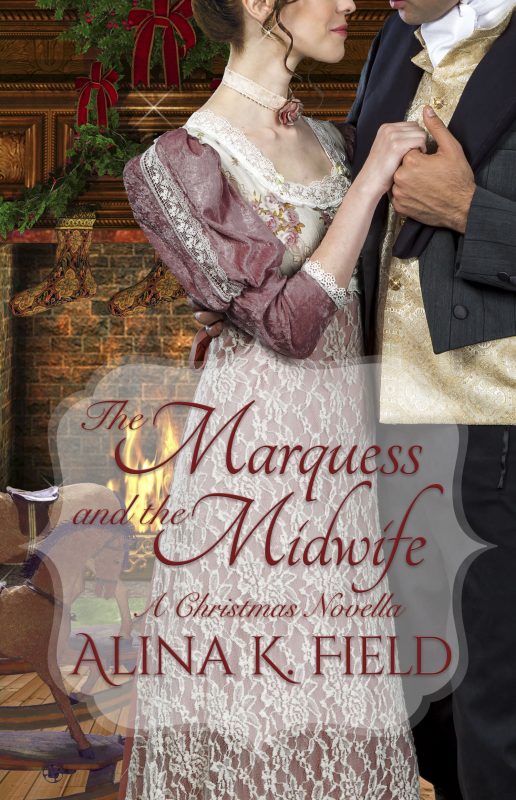
Uncovering a lie drives a new Marquess back from a self-imposed exile to find the only woman he’s ever loved.
More info →