Melt the Ice Hat
August 13, 2026 by marianne h donley in category From a Cabin in the Woods by Members of Bethlehem Writers Group tagged as Bonnets Rouges, knitting, Liberty Cap, Marianne, Melt the Ice Hat, Nisselue Hat, Phrygian cap, Voyageur cap
When I’m not writing, I knit.
Sometime in January a red knitted hat pattern was recommended to me on my Ravelry page. For those of you who do not know, Ravelry is a free website that connects fiber crafters (knitting, crocheting, sewing, etc.) from around the world. It had a giant database of patterns—some free, some for sale—yarn, pattern designers, and a personal page you can customize.
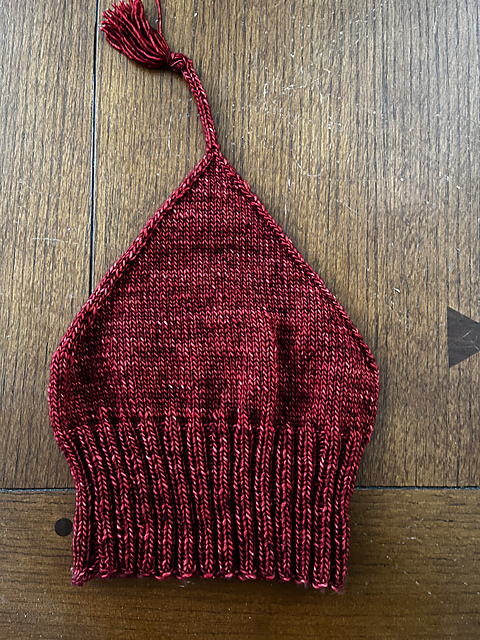
Anyway, up popped The Melt the Ice Hat. The designer, Paul S Neary, based his design on the hats Norwegians made and wore in the 1940s as a protest to the Nazi occupation. This hat was to protest the ICE occupation and raids in Minnesota. Proceeds from the pattern are donated “to immigrant aid agencies for distribution to those impacted by the actions of ICE.”
I immediately bought the pattern and ordered two skeins of red yarn. In late January, they may have been the last skeins of red yarn available—every knitter on Ravelry seemed to be knitting The Melt the Ice Hat. The hat has a wide brim of ribbing, a top of stockinette that decreases to a point. A braid and tassel decorate the tip of the hat. I was going to have to wait a few days for my red yarn, I cast on in blue.
It was a fast knit, but I wanted a longer brim and a longer more pointier top. So I kept notes of what I would do when that red yarn arrived. As I was knitting, I was also reading information about The Red Hat.
Evidently, the red hat from Norway was called a “Nisselue” Hat or Santa Hat and was actually outlawed by the Nazis once they figured out the Norwegians were wearing the hats as protest. The Guardian has a great article with pictures of The Red Hats here.
My favorite part of the Norwegian protest hats—when outlawed the protesters switched to wearing a paper clip on their clothes. Not as in your face as a red hat, but still a protest. If you scroll down to the end of the above linked article you will see examples of the Red Hat from the Norway’s Resistance Museum.

Then, I read the Nisselue was really a French voyageur cap. I looked up voyageur caps. Sure enough, French trappers in North America wore red hats shaped like The Red Hat, but a bit longer. Instead of the braid and tassel, the tip was often fastened to the brim with some type of cockade (a circle of ribbon that could be symbolic, flag colors, etc).
Of course, most articles about voyageur caps mentioned the famous Bonnets Rouges of the French Revolution. “In revolutionary France, the cap, or bonnet rouge was first seen publicly in May 1790 at a festival in Troyes, adorning a statue representing the nation, and at Lyon, on a lance carried by the goddess Libertas. To this day the national emblem of France, Marianne, is shown wearing a Phrygian cap.
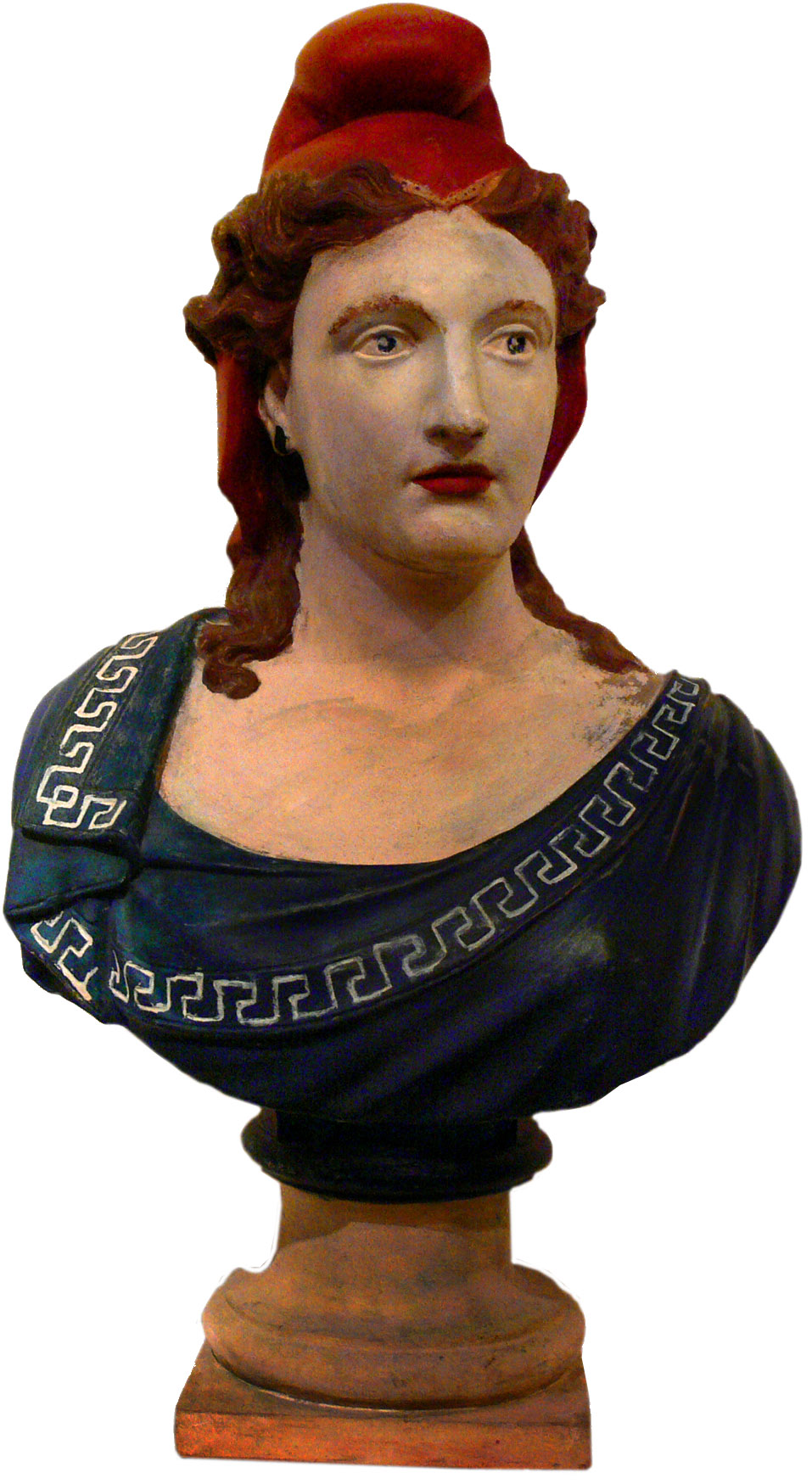
Photo de F. Lamiot
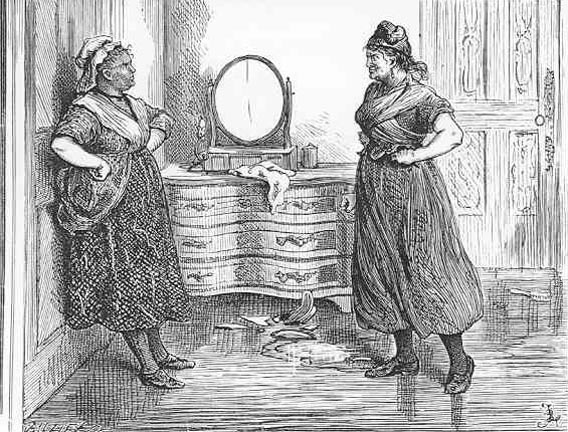
The caps were often knitted by women known as Tricoteuse who sat beside the guillotine during public executions in Paris in the French Revolution, supposedly continuing to knit in between executions.” (Wikipedia) And of course there is the famous knitter Madame Defarge from Tale of Two Cities. I wonder if she sat by the guillotine and knitted Bonnets Rouges with the the names of the people to be killed coded into the brim of the hats.
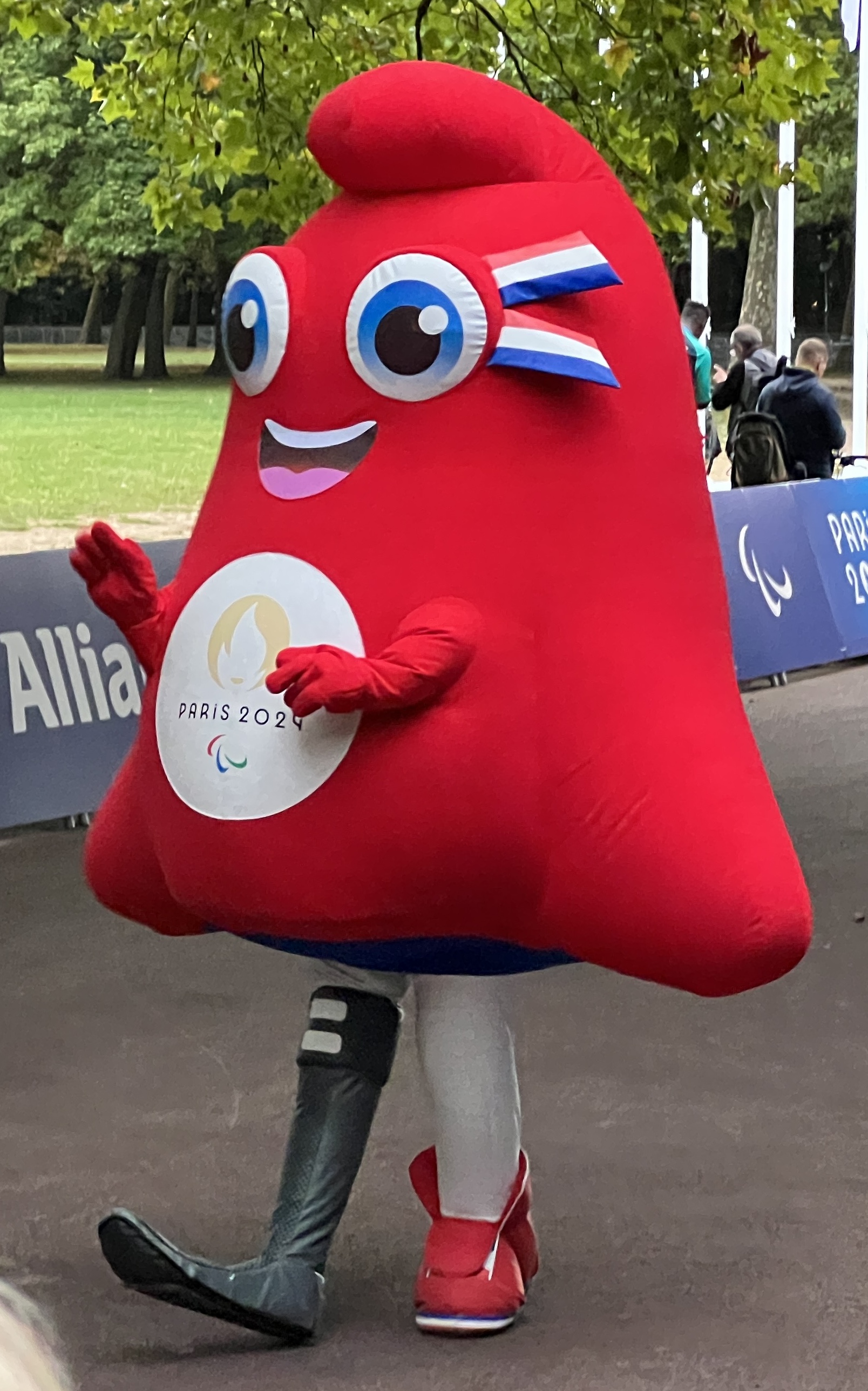
The bonnet rouge is so interconnected with France the the official 2024 Olympic mascot was a conical cap, the Phryge.
After reading about the bonnet rouges, someone mentioned the hats were actually American Liberty hats, worn during the American Revolution. I looked that up, and not only is the Liberty hat a thing, but Minutemen reenactors have a poling the Liberty Hat every year in Bedford, Massachusetts. In New York City, the Sons of Liberty had a tradition to erect the liberty pole to protest the British. The liberty pole is topped with the liberty hat.
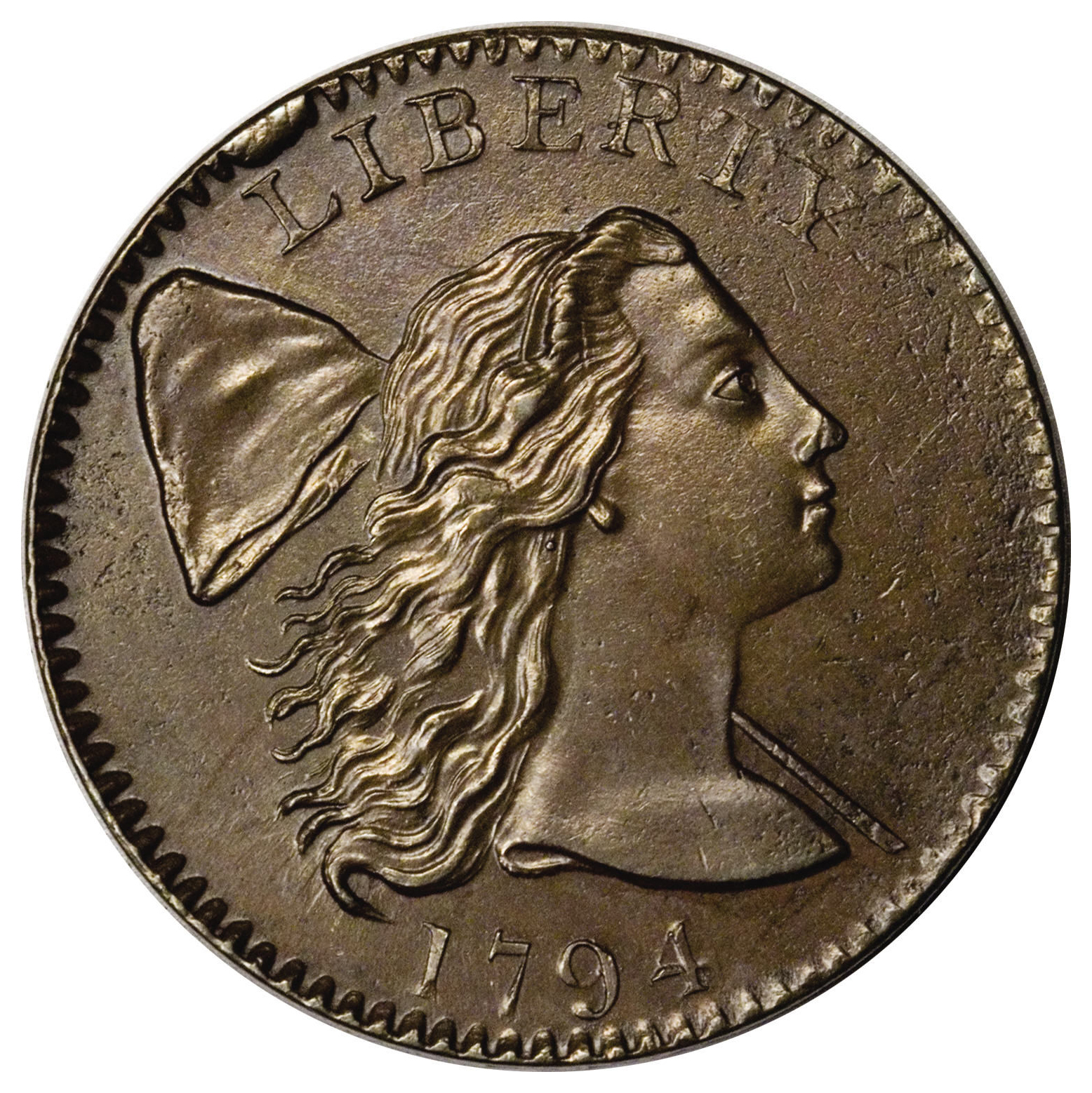
The liberty cap shows up in American art all over Washington, DC. Colonies and early states used the liberty cap on flags and in seals. There was even a liberty cap large cent coin minted from from 1793 until 1796. The coin features an image of the goddess of Liberty and her accompanying Phrygian cap. (We’ll get to that cap in a bit.) The American Liberty hats had the tips folded forward, rather than to the side. Most of the pictures show the hat without a folded brim and worn above the ears—or like in Bedford, installed on a Liberty Pole.
Many counties adopted the liberty hat as their symbol of freedom. The coat of arms of Haiti features a liberty hat atop a palm tree. For Argentina the hat is atop a pole being held by two clasping hands. Columbia also includes it in their coat of arms as a symbol of liberty and freedom. But as I mention before the liberty hat is sometimes referred to as a Phrygian cap.
Turns out the Phrygian cap is much much older.
“The Phrygian cap, also known as Thracian cap and liberty cap, is a soft conical cap with the apex bent over, associated in antiquity with several peoples in Eastern Europe, Anatolia, and Asia. The Phrygian cap was worn by Thracians, Dacians, Persians, Medes, Scythians, Trojans, and Phrygians after whom it is named. The oldest known depiction of the Phrygian cap is from Persepolis in Iran.” (Wikipedia)
The above link includes tons of pictures of the Phrygian cap in history. A carving of a Parthian wearing one from 203 AD. A 4th century BC bust of Attis—labeled Phrygian Attis wearing the cap. Roman artwork shows Paris of Troy wearing the hat. The Basilica of Sant’Apolinare Nuovo in Italy has the Three Wise Men wearing Phrygian caps. The cap was so common bronze helmets designed by the Thracian look exactly like a Phrygian cap, complete with the forward folding tip.
Just to round out the story of the liberty cap, I mentioned above that the Norway was called a “Nisselue” Hat or Santa Hat. So, Santa wears a modified Phrygian hat as do gnomes—and Smurfs.
The Melt the Ice Hat has a rich history. I enjoyed knitting it (twice). I have another one planned, but this time I’m going for the more voyageur styled cap. This hat is knitted in one piece with a elongated football shape. Once finished, one pointed end is tucked inside the other. This makes a double thick hat and if the brim is folded—quadruple thick and very warm. I’ll post pictures when I finish.

Books by Marianne

















Featured Books
BEAGLEMANIA

Lauren Vancouver is the head of HotRescues, a no-kill animal shelter north of Los Angeles, but it's often human nature that puts her in the path of danger.
More info →








THREE TREATS TOO MANY

When a romantic rival opens a competing restaurant in small-town Wheaton, Alabama, Sarah Blair discovers murder is the specialty of the house . . .
More info →