Full of Scorpions Is My Mind by Dianna Sinovic
December 13, 2025 by Bethlehem Writers Group in category From a Cabin in the Woods by Members of Bethlehem Writers Group tagged as Bethlehem Writers Group LLC, Dianna Sinovic, Macbeth, Something wicked this way comes, weird sisters
My long relationship with “the Scottish Play” dates back to grade school, when I was assigned the role of one of the Weird Sisters (was the teacher trying to tell me something?). Two other girls and I paraded around a faux cauldron to intone those famous lines:
Double, double, toil and trouble;
Fire burn and cauldron bubble.
I’m pretty sure my class did not stage the entire five acts of Macbeth, which seems too macabre for that age group. But I suppose that early exposure to the witches/weyward ones led me to my writing path of paranormal and horror.
Seeing the play again recently reminded me how powerful it is, and how it still speaks to the human condition and the ability of power to corrupt. It is, according to Meghan Winch writing in the Lantern Theater’s program, “about an unfit and unaccountable ruler seizing power from the rightful sovereign” and illustrates that “the people below suffer most when there is instability at the top.” Stuff right out of today’s news feeds.

The play is also full of evocative phrases that live on even today, more than 400 years later: “when the battle’s lost and won”; “what’s done cannot be undone”; “I bear a charméd life,” and “the milk of human kindness,” among others. One particular phrase, in a line delivered by Macbeth, had special relevance to me as a mystery writer: malice domestic. These days it’s the name of an annual crime fiction fan convention.
The Lantern Theater in Philadelphia is an intimate space, a theater in the round; the onstage sparring with spears and swords took place only a few feet from the theatergoers. The aisle one seat to my right was a key passageway during the production: Macbeth and his Lady ran up that aisle, to murder Duncan, the king, and Macduff used it to discover the dead body. Settled in a front-row corner, I was so close to the action that I was probably the only audience member who could see the apparitions in Act IV, as they stood “hidden” behind a scrim to speak their lines.
And speaking of lines, a play (Shakespearean or not) embodies the oft-repeated “rule” in writing fiction: show, don’t tell. On the stage, dialogue and action are everything; there is no room for exposition. We understand the story via the words the characters speak and how others on stage react.
Regarding those infamous weird sisters, they seem to be more than mere witches. The lines they speak weave an incantation via the rhyme, the alliteration, and the strangeness of the words themselves. “Weird” from Shakespeare’s time did not mean “strange.” It stemmed from “wayward,” which referred to “destiny” or “fate.” As such, did the sisters make Macbeth commit the murderous crime? Or did that tendency lie within him all along?
That’s for you to decide.
By the pricking of my thumbs,
Something wicked this way comes.
Dianna’s Books


BWG’s Books


Featured Books
MERRY BELLES: A Bluestocking Collection with Friends
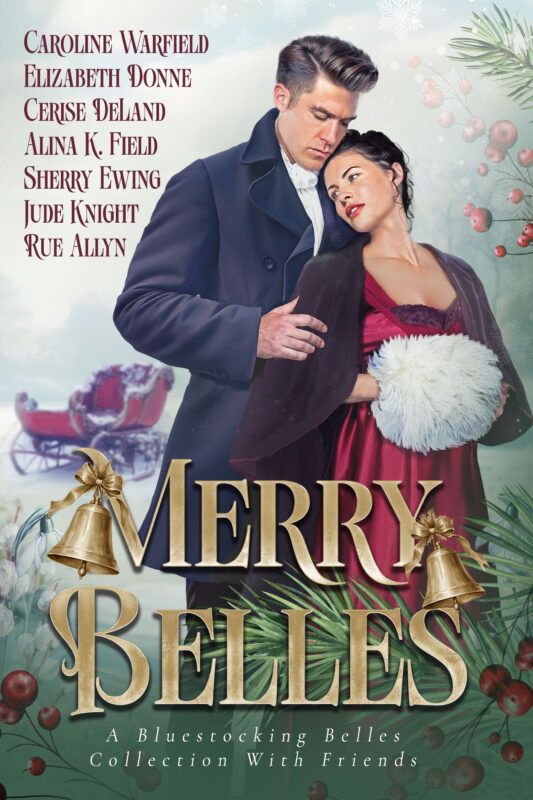
Seven charming holiday stories from award-winning and best-selling authors.
More info →





DEEP INTO DUSK
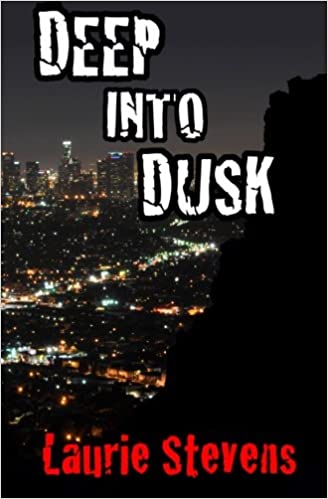
In the second pulse-pounding thriller in the series, Detective Gabriel McRay is once again forced to face his inner demons
More info → 
IN TWILIGHT’S HUSH (A GABRIEL MCRAY NOVEL BOOK 4)
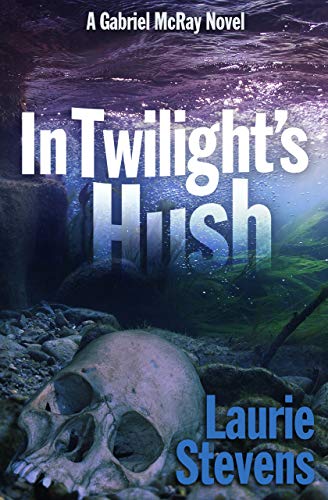
Detective Gabriel McRay investigates a cold case from 1988 involving a missing teenager named Nancy Lewicki.
More info →