Building a Strong Author Brand
July 12, 2026 by Denise M. Colby in category The Writing Journey by Denise Colby tagged as Author Brand, author branding, building a brand, Denise M. ColbyOne of the things I enjoy about being an author is building a strong author brand. I love playing in this space and coming up with new ideas to create things to support my books.
What is Author Branding?
Author branding is identifying the unique promise you give to your readers. This can include your writing style, themes, your visuals, and your public identity. Readers want to know what they will get when they pick up one of your books.
To give you an idea, one of the things that is a part of my brand is journals and prayer journaling (every book has a journal entry before each chapter and I have a how to build a prayer journal website page – which gets the most clicks every month). Also a part of my brand is one-room schoolhouses (I have a website page on ones I visited) and schoolmarms.
My stories are set in the late 1860s and include schoolteachers and one-room schoolhouses. Learning about the specific rules they had to follow and what they were and weren’t allowed to do has given me plenty of material, as well as some interesting fodder for my stories and for writing blog posts to share the research I’ve gathered.
I can’t believe how much my branding has grown in the last two years.
Now that I have more than one book out, it’s been so much fun fine-tuning what I started with and building new graphics for my headers, posts, bookmarks, and stickers that support my stories, and give readers a flavor of what they would find when they read them.
Building an Author Brand
Knowing your audience is key to building an author brand that readers can connect with.
When I brainstormed my branding elements I came up with all sorts of ideas, colors, and feelings I wanted to convey, including using browns, blues, and off-white with accent colors of red, yellow, and green.
My covers and their colors tend to drive many of the graphics I’ve built, but I’ve found wood as a background theme to be the most complementary. I use both a dark wood and white-washed wood the most. One great idea is to find 12 x 12 scrapbook paper (that’s what the dark wood design is) and take pictures of things on it. Then you have a consistent background that’s inviting. I use the white-washed in most of my canva graphics. These have both worked out well.
Sometimes, I also will use a light color background to match my book covers when needed, and for my launch specific graphics, I’ve found finding a background that fits the setting and lighten it to work really well.
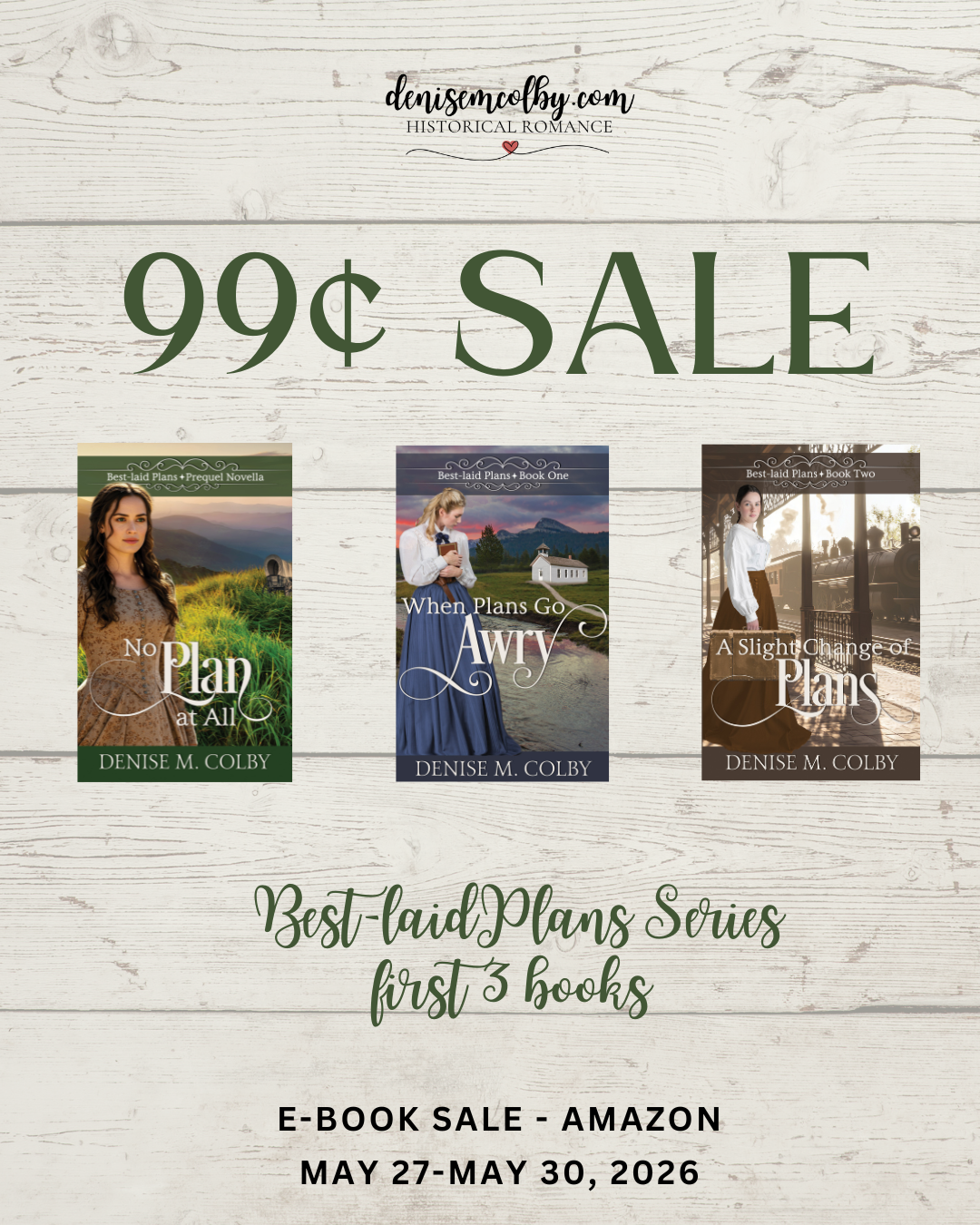
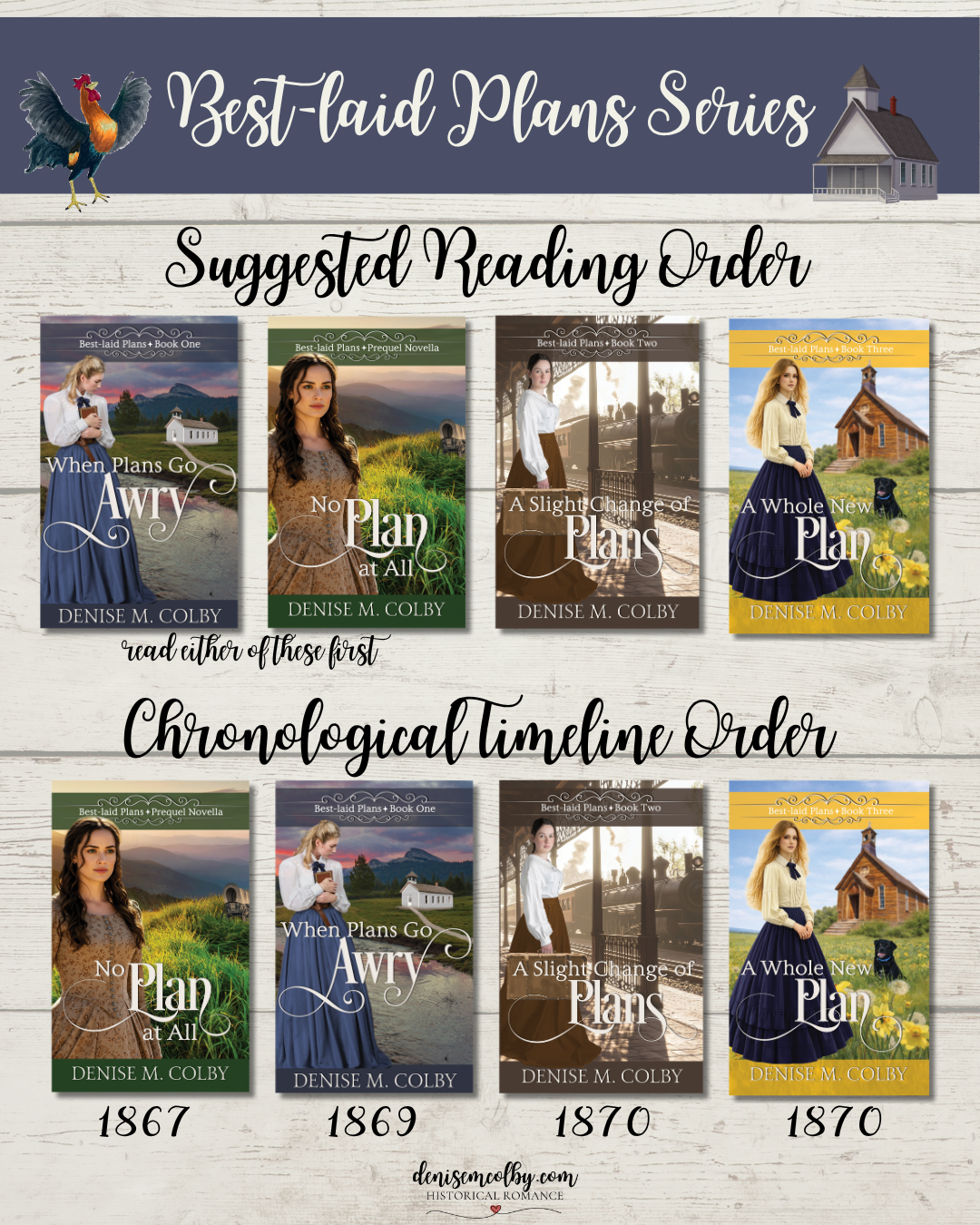
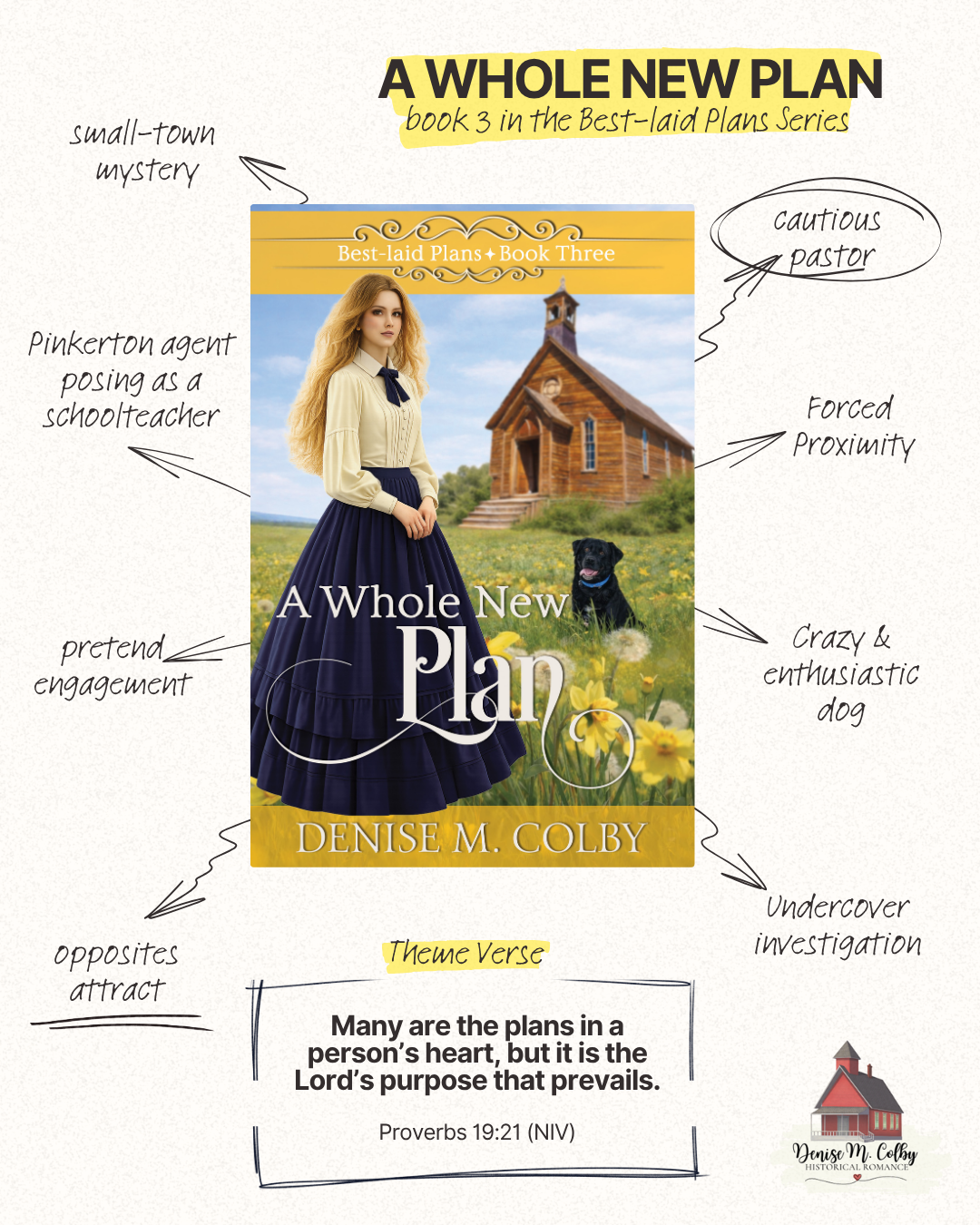
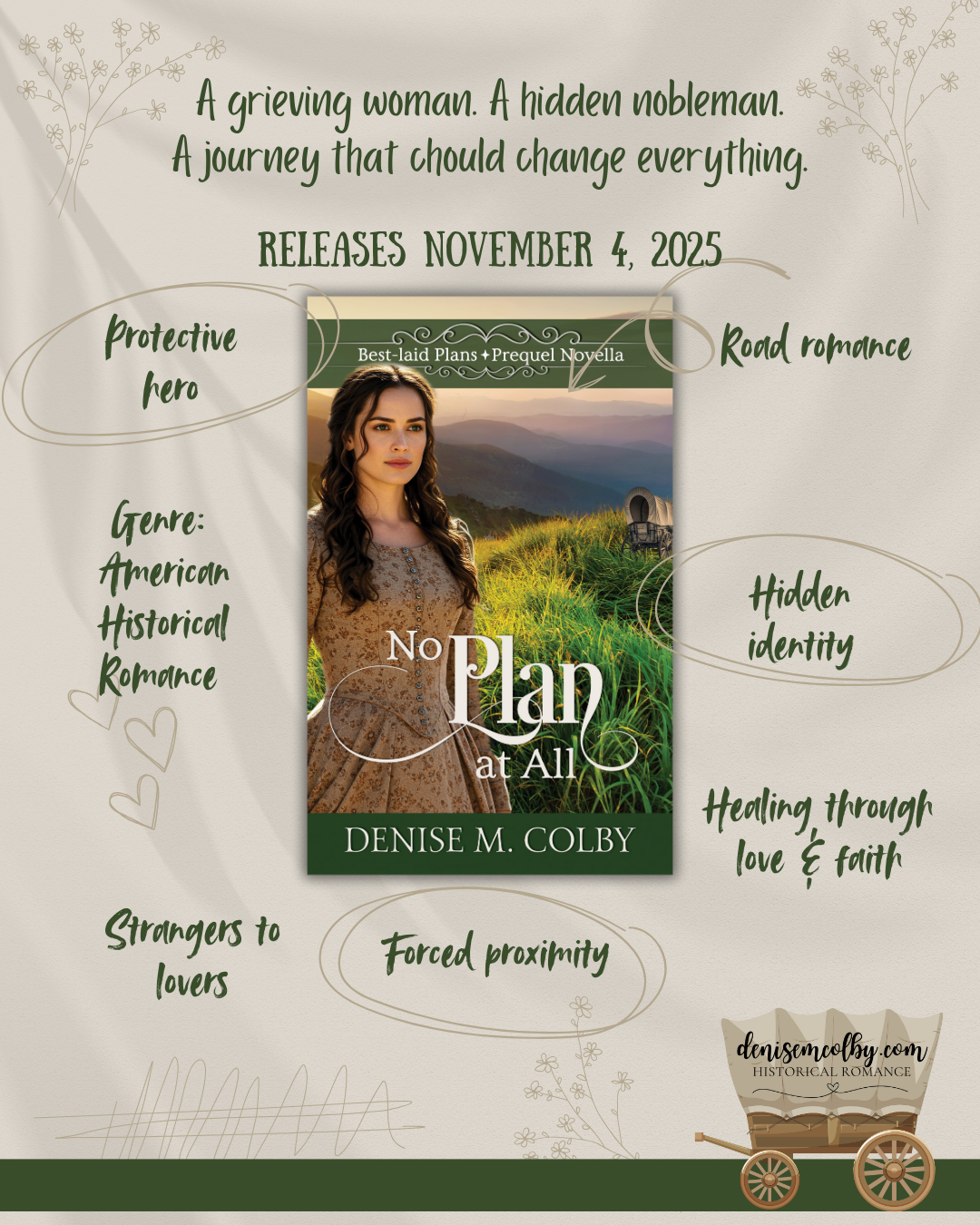
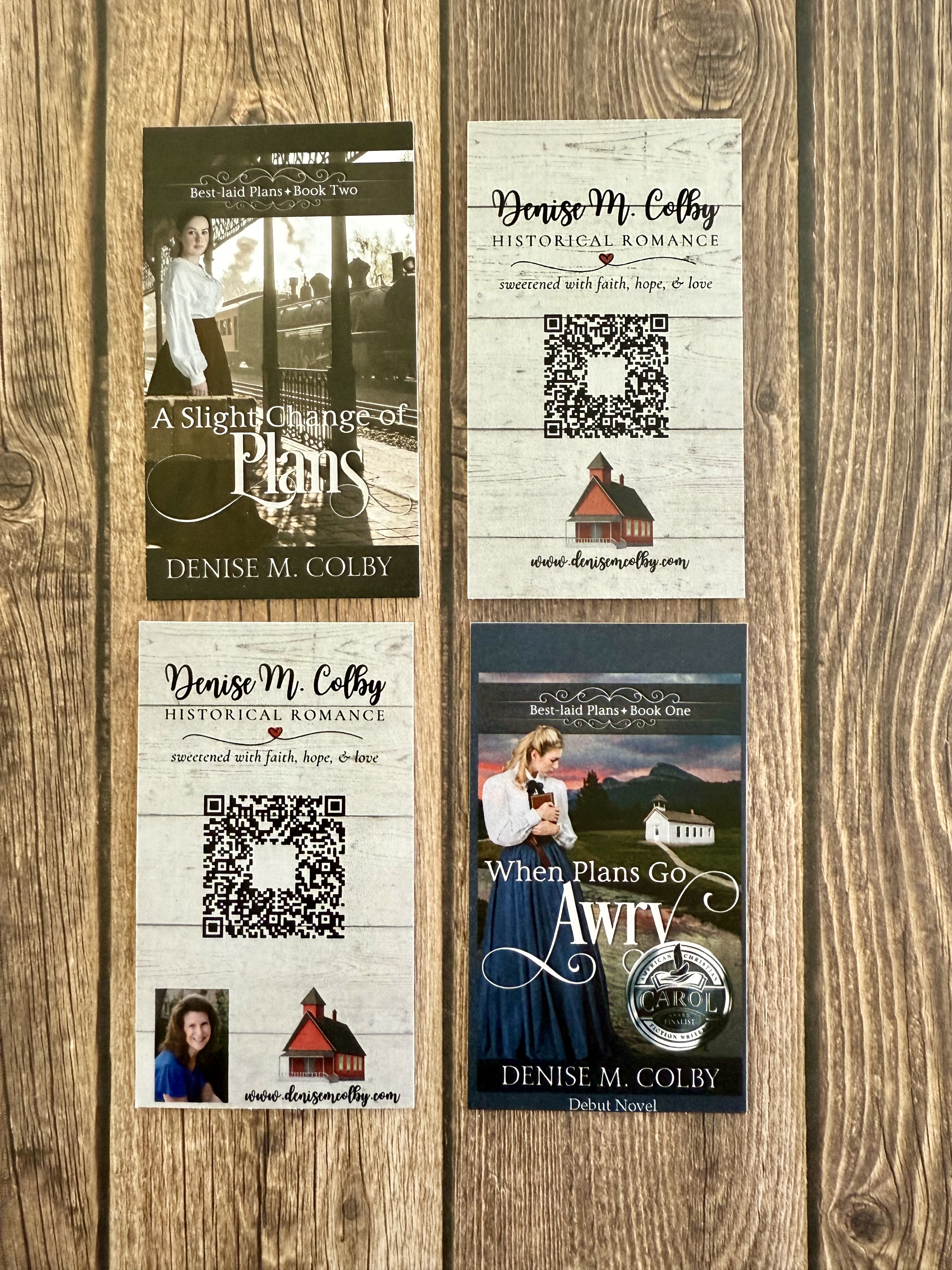
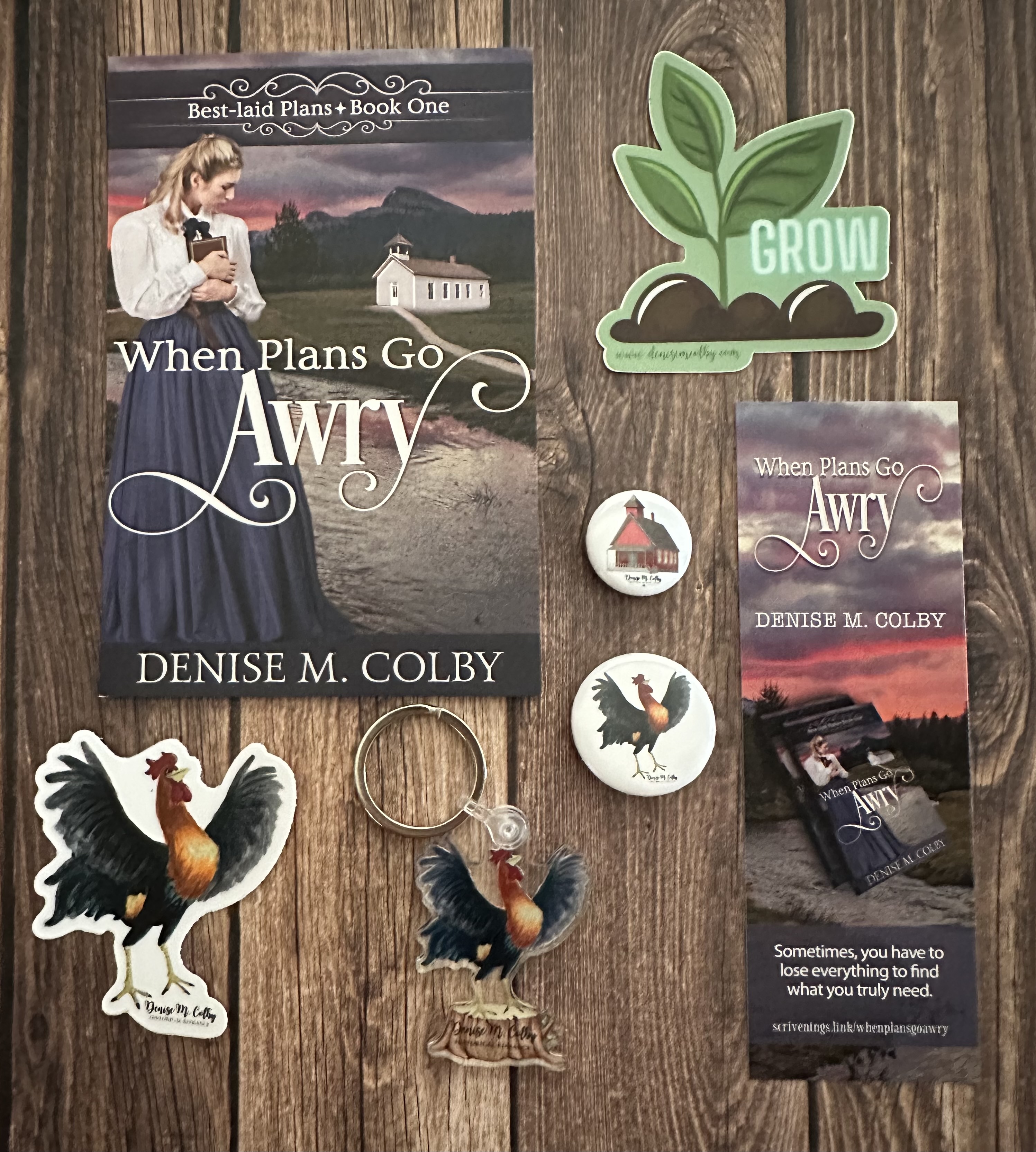
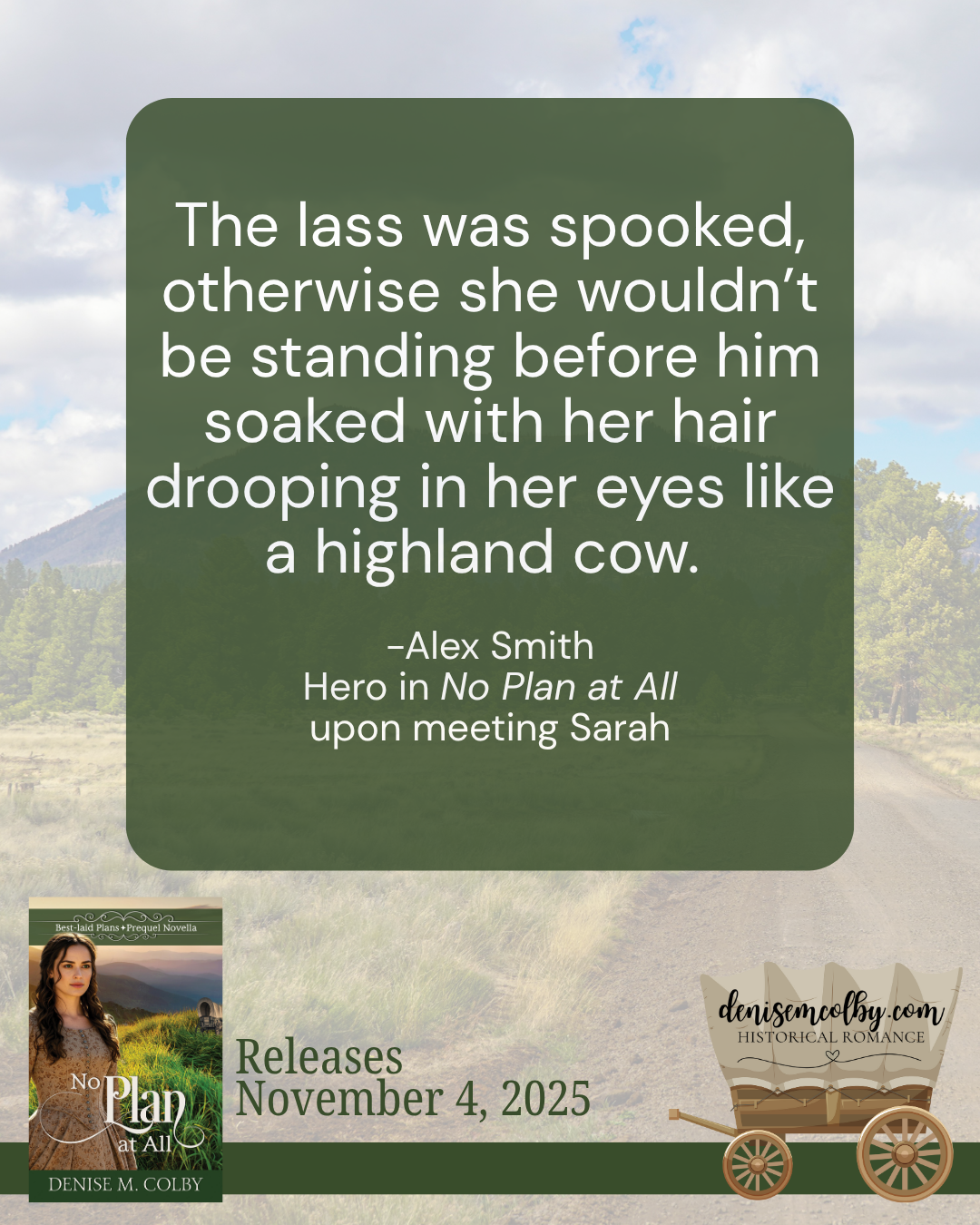
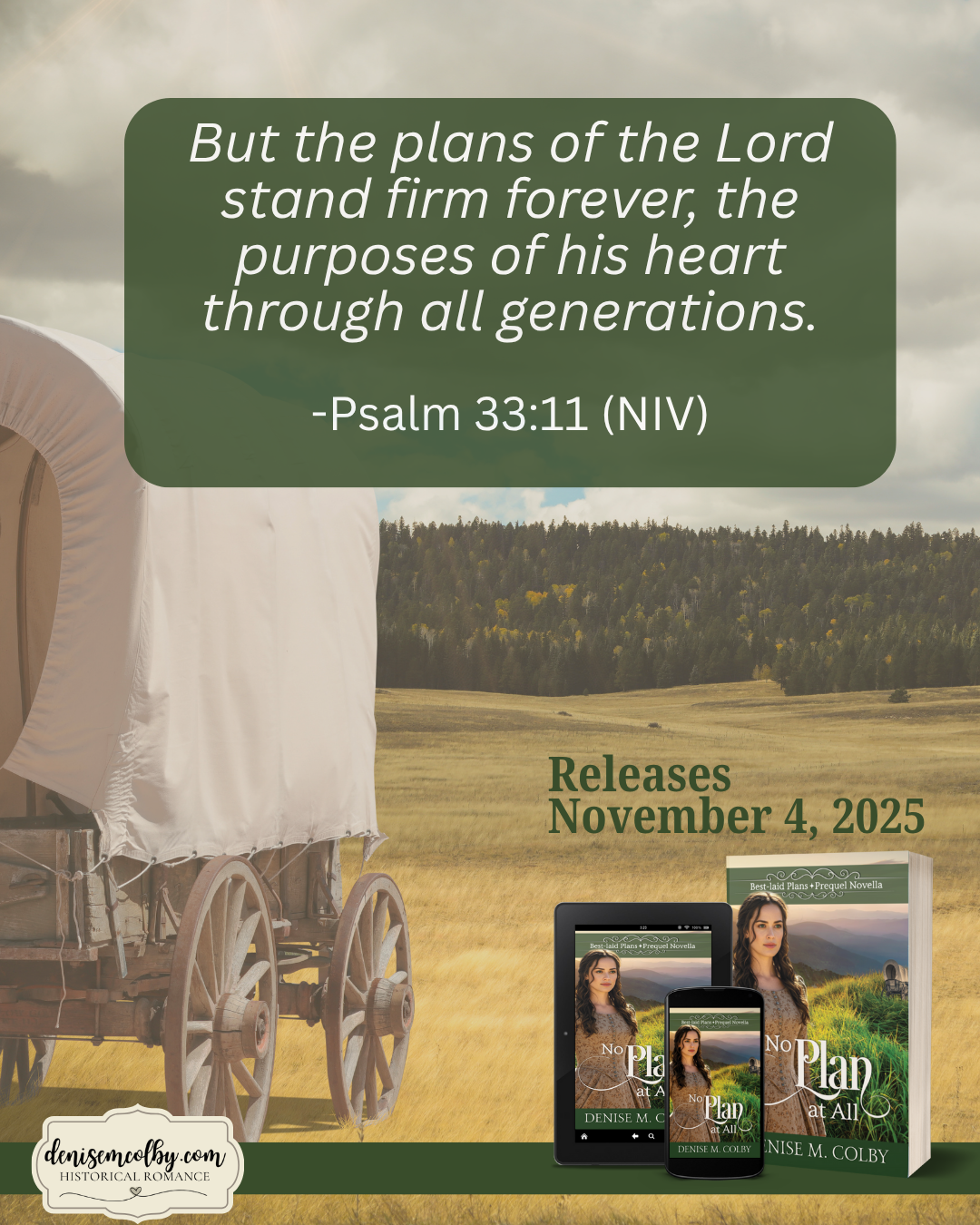

Building Branding Elements From Characters & Setting
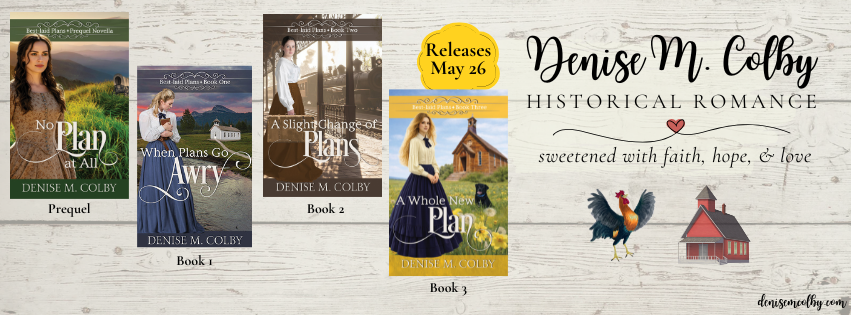
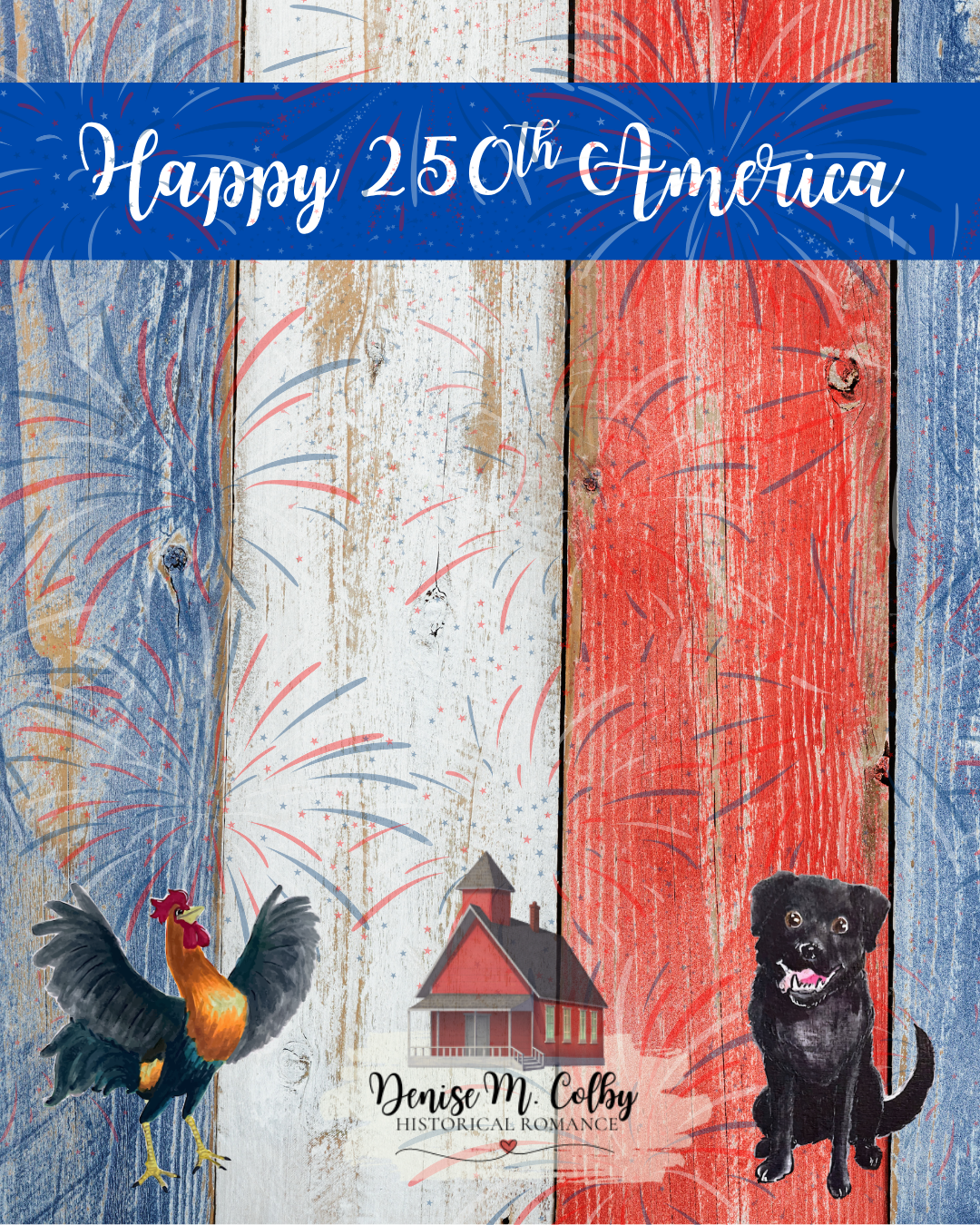
For me, I’m writing western historical with one-room schoolhouses as a major setting point. This is part of my author brand. I created my logo to include a red one-room schoolhouse. I had someone ask if that’s limiting, but I’ve been using it now for about three years and if I continue this series it would be 2030 before I would even consider the next series and it still could have a one-room schoolhouse in it.
Also, one of the best things I did was create a memorable character I could build something around, including merchandise. Bert, my crazy rooster who resides in my small western town of Washton, has become my readers favorite. My son drew him for me and I have used that image in graphics and made stickers, buttons, keychains, and now a tshirt.
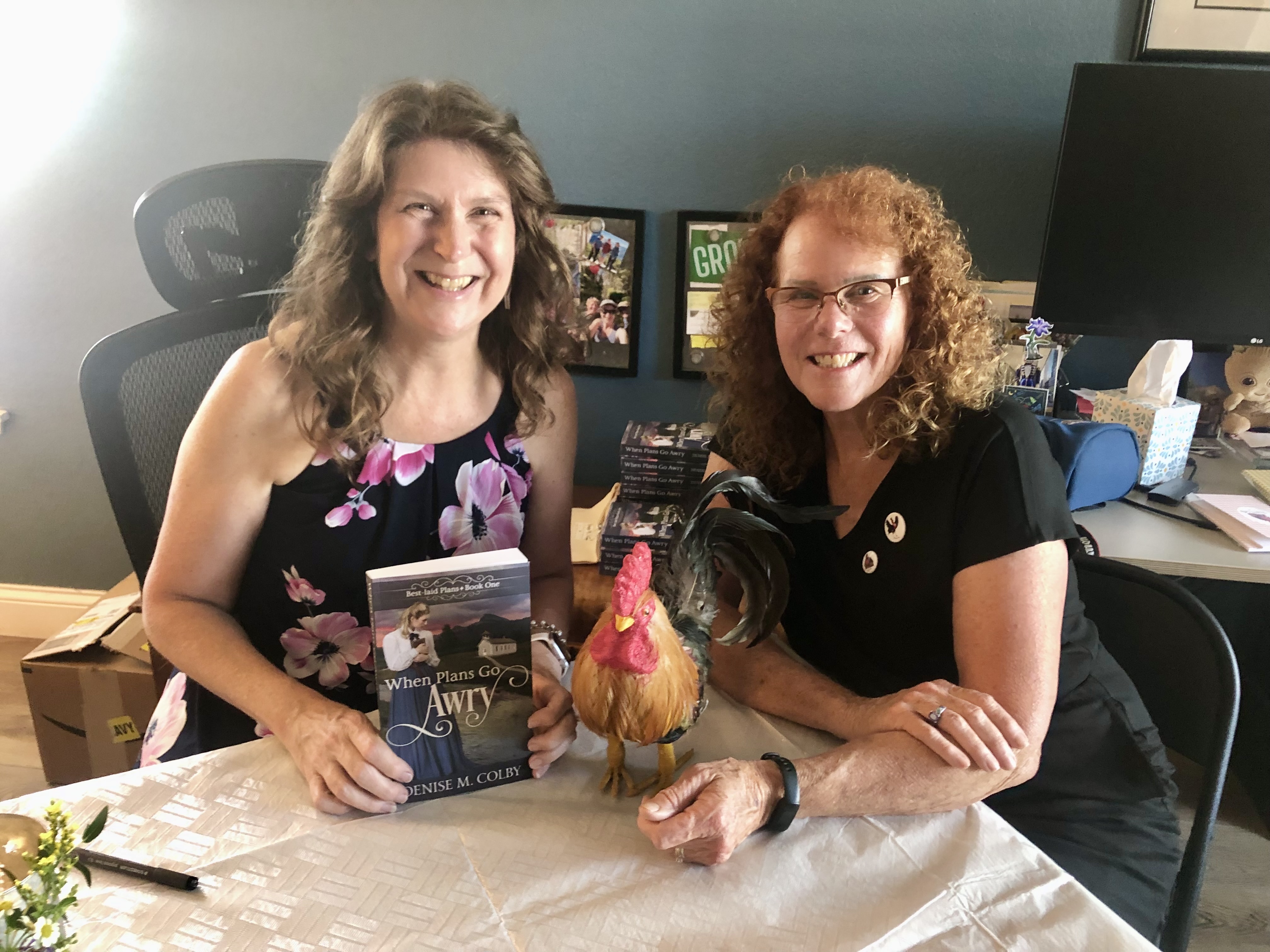
I also have a cool collection of rooster-oriented things friends have gifted me. The rooster on the table below was actually my mom’s. She had used it as decor, and I kept it, telling myself I would put it out once I published my first book. It was such a moment when I pulled it out. Now it sits stays out.
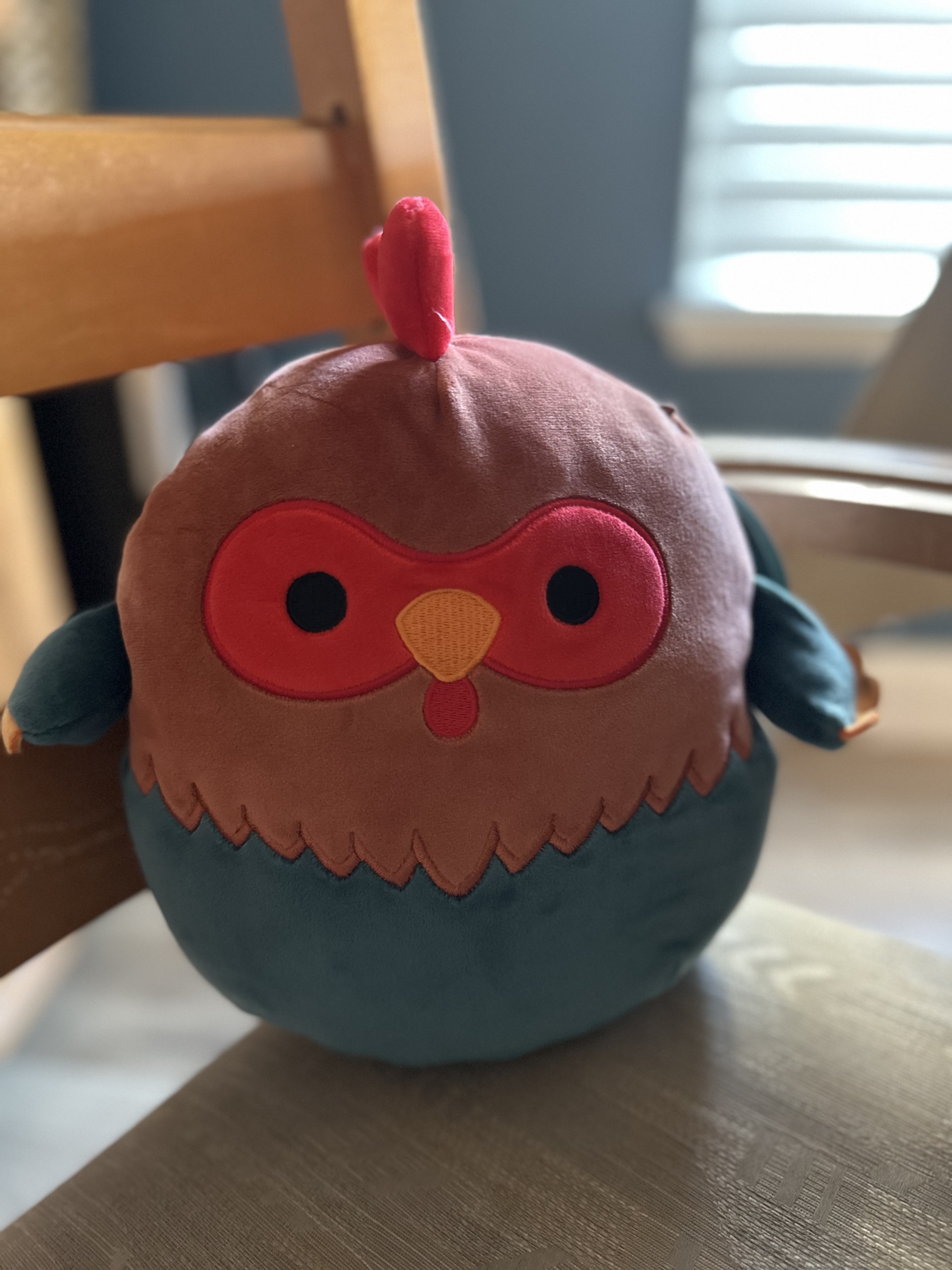
One of my other favorites is my rooster squish mellow. He goes with me to all my author events. Easy to pack and lightweight, he grabs attention. I’ve bought extra and gave them as launch team gifts and for drawings/giveaways.
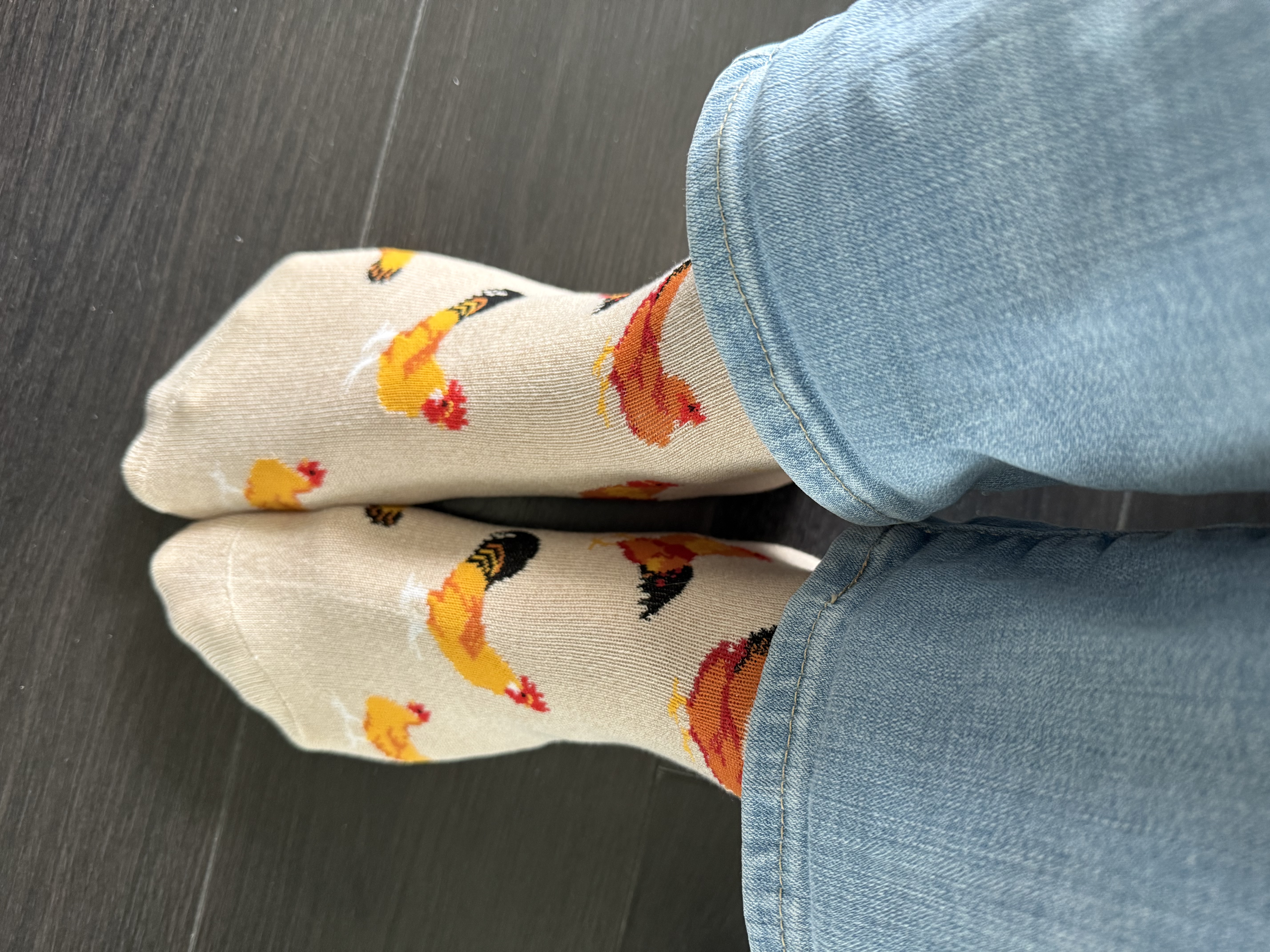
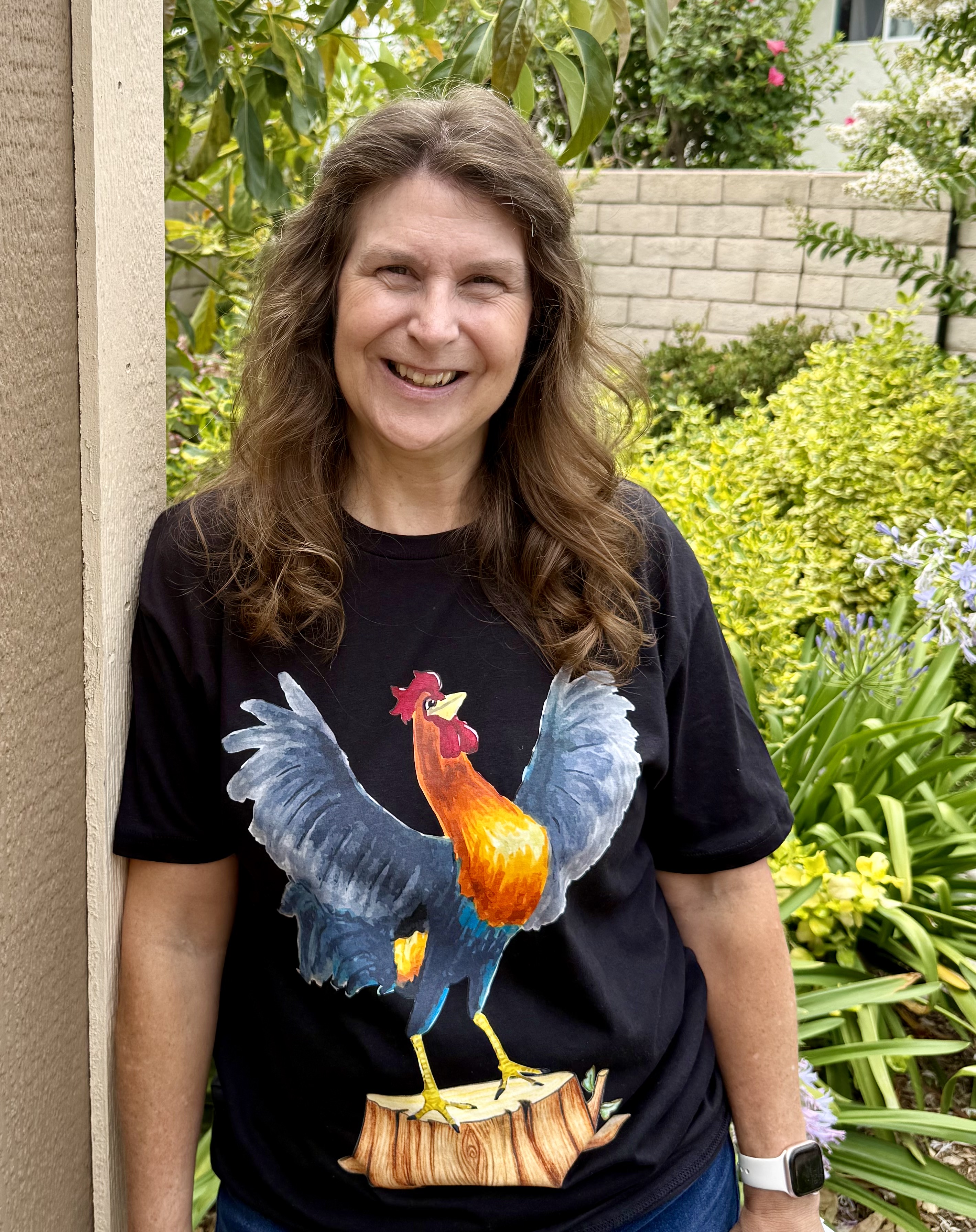
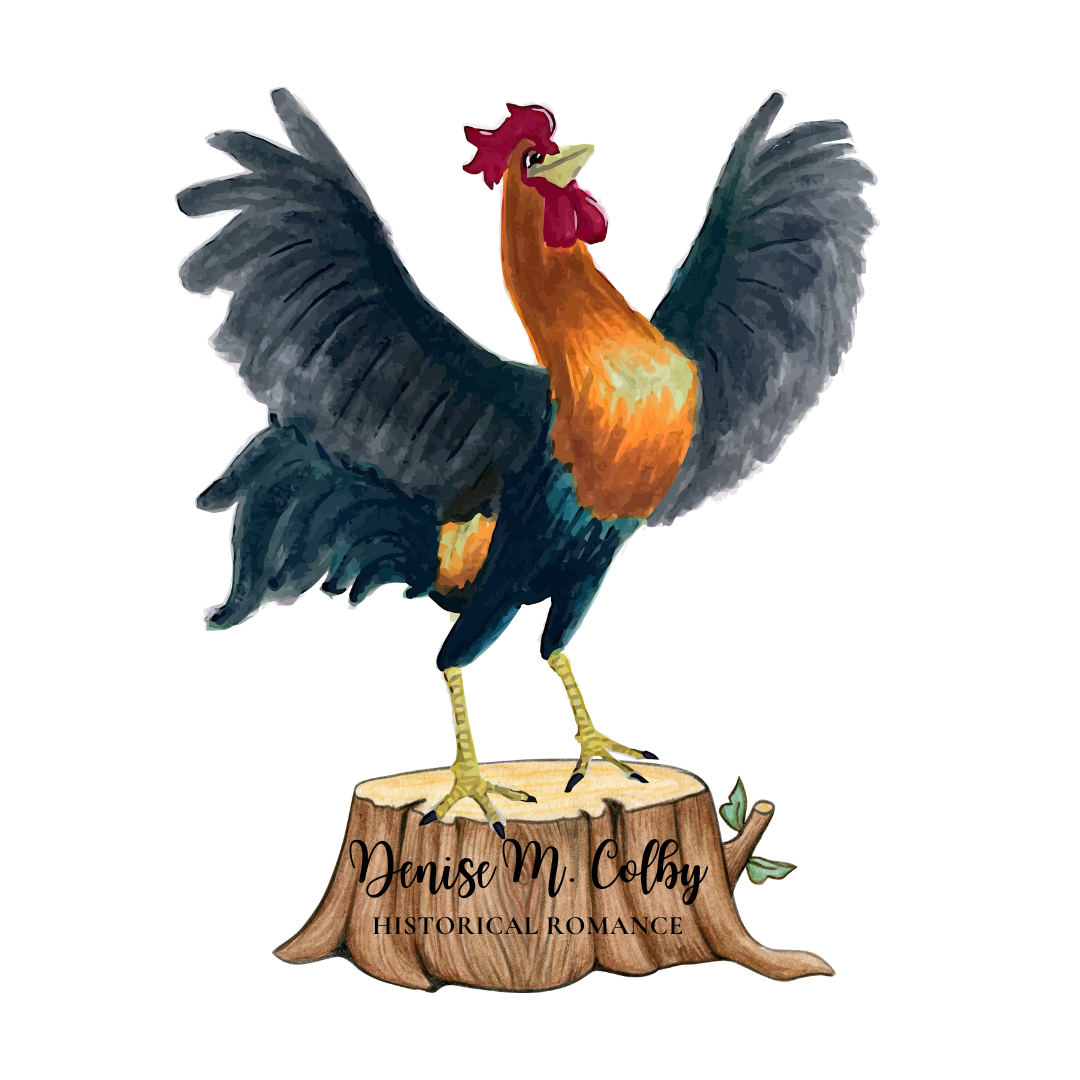
I recently posted a reel with me showing off this shirt and had several people say that would love to own one. I can’t post the video here (too big), but here’s a link to my instagram post (where you’ll see more of my branding). I’m excited about that because it helps build my author brand, but also makes me happy that readers love this character as much as I do.
Creating Materials from Themes
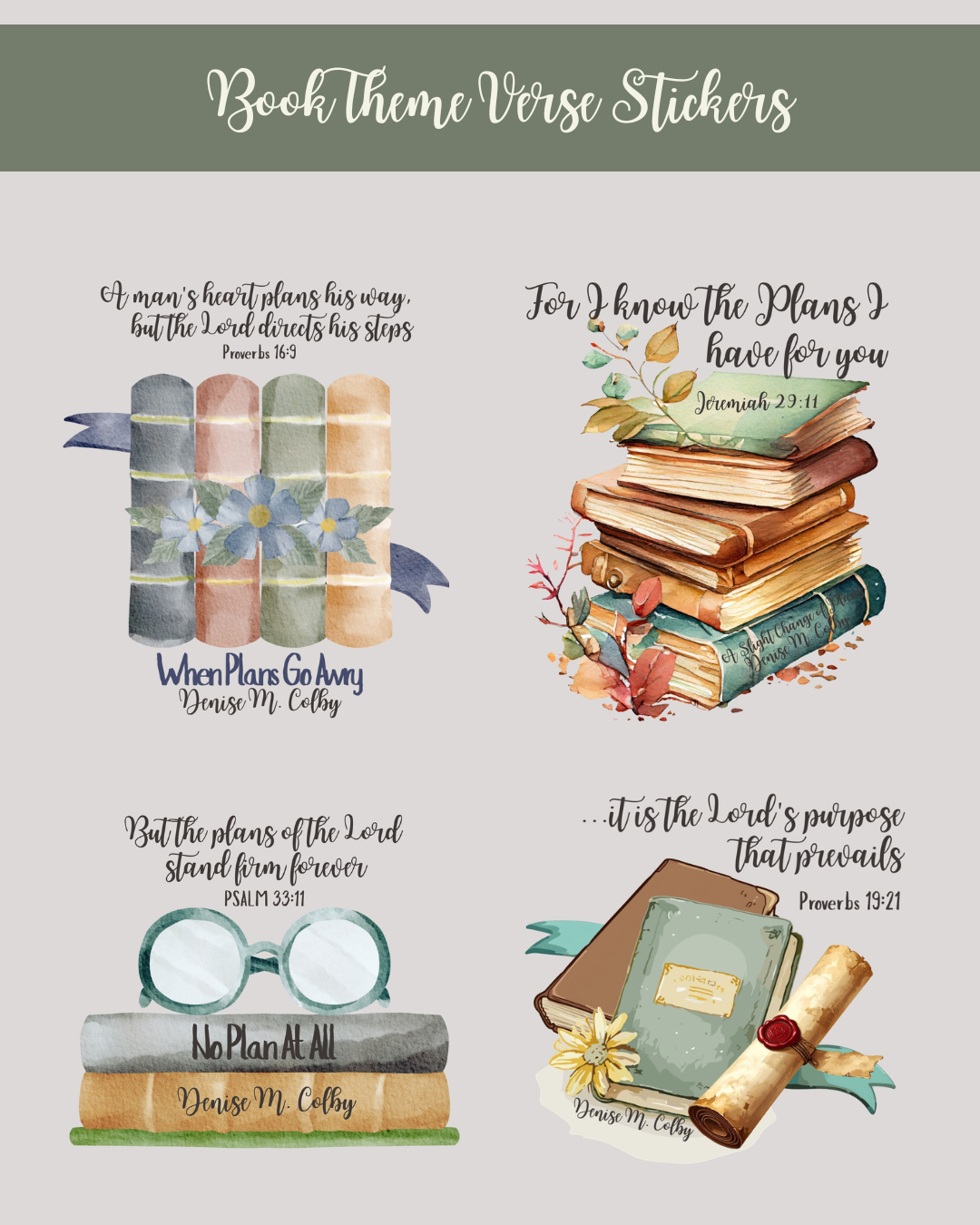
One of the other things I’ve created are Bible verse stickers that have the main theme verse per book on them. Now that I have four books, I have four stickers.
At my last two book signings, I gave the corresponding sticker along with the book they purchased. I also use these as giveaways in my newsletter. In the future I’d love to have a sticker shop to sell them, or to sell them at book signings, so if someone doesn’t want to buy a book, they may still make a purchase.
Speaking of book signings. I finally created a stand up banner and love how it came out. I designed it in Canva using all my author branding elements along with my book covers.
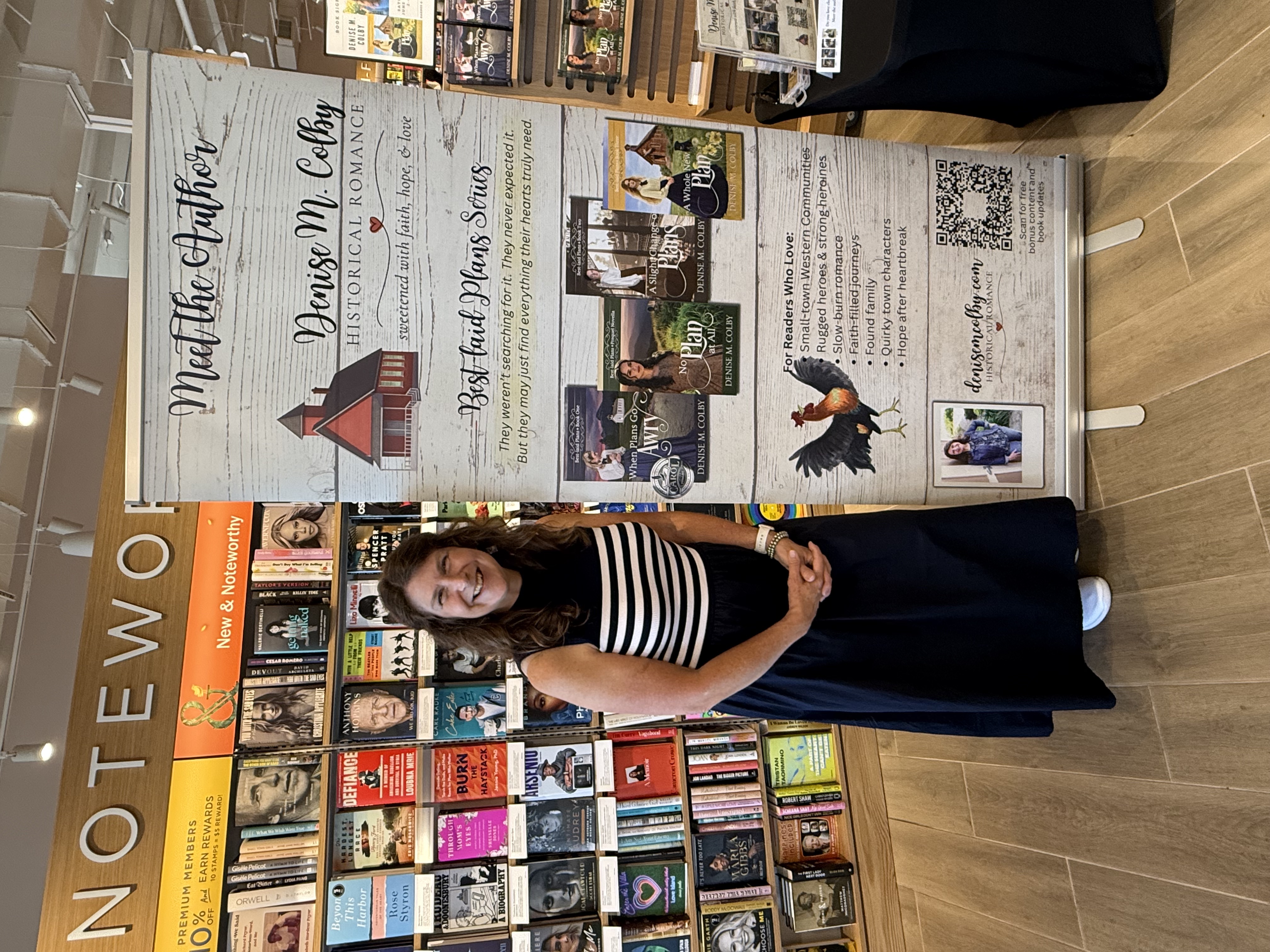
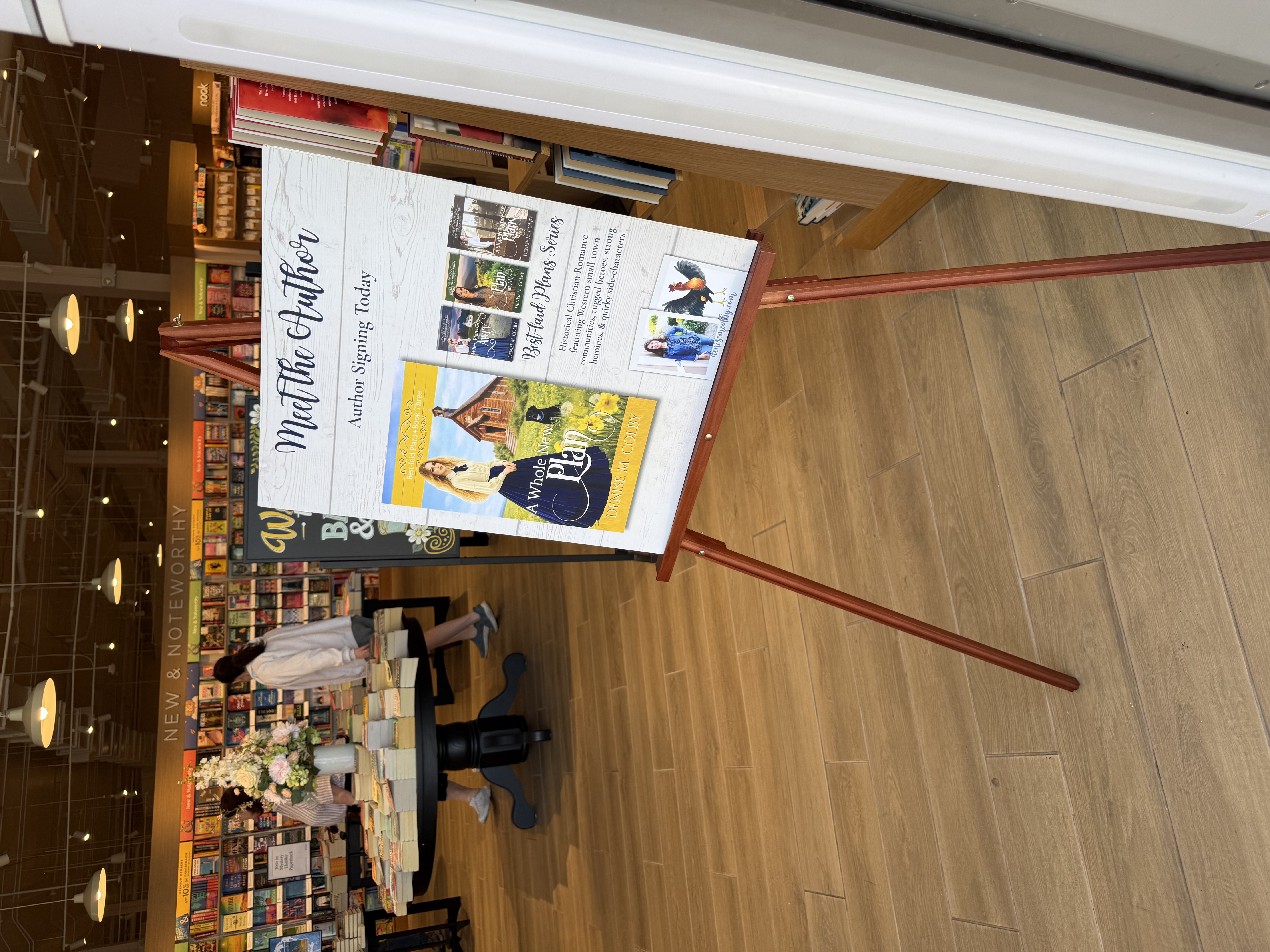
This easel poster was built to put at the front door of the book signing to capture interest right away.
I hope all of this gives you ideas of things you can do with to help build your author brand. Would love to hear your own ideas as well as thoughts about what I’ve shared in the comments below.
Denise loves to share about her writing journey (see all her posts here), including her word of the year (this year it is BALANCE), writing her Best-laid Plans Series, and all the things in between.
Denise M. Colby writes historical romance sweetened with faith, hope, and love. She finds history fascinating and contemplates often how it was to live in the 1800’s. Her debut novel, When Plans Go Awry, is a 2025 Carol Award finalist. Sign up for her newsletter at www.denisemcolby.com or follow Denise on Facebook, Instagram, Bookbub, Pinterest, or GoodReads.
2 1 Read moreDo or Do Not, There is no Try When it Comes to Building your Brand
May 12, 2020 by Denise M. Colby in category The Writing Journey by Denise Colby tagged as author branding, Denise M. Colby, encouragement, SEO MarketingSince May is all about Star Wars, I thought I’d start with a famous Yoda quote and apply it to a building your brand message:
“Do or Do Not, There is no Try”
Yoda
How does this apply to your author platform?
- We write or we do not write.
- We post social media or we do not post social media.
- We start building a brand or we do not.
When it comes to building your brand, there’s this fear of getting things wrong.
And sometimes this fear prevents us from doing anything about it.
But that’s exactly what I want to encourage you to do. Do something! Don’t just say you will try. And know, whatever you do, it doesn’t have to be 100% perfect. It’s most important for you to do.
Yes, I know, all the different variables to building your author brand can be stressful. But keep in mind, I’ve seen several small businesses evolve and grow in their online presence. It has opened my eyes to the fact that they did not get to their current place overnight. There’s not a magic switch that turns on everything perfectly. Most sites have evolved over time, trying things that work and don’t work and making adjustments as they work out the kinks.
Our author websites and social media are just like this.
We need to do some things first before we figure out if it works or not.
That’s what happened with my Marketing for Authors newsletter. I saw a graphic I liked and wanted to make it into the brand for Marketing for Authors. But no matter what I did, it wasn’t working the way I pictured it. And so I put off sending out my newsletter, or doing anything else for that matter. Not very business-minded, was it? So, I too am right in the thick of it, challenging myself with starting over and moving forward.
I’ve since chosen a simple design (thanks Canva!) and color scheme that I can incorporate into my training materials easily. And if I need to change some things as I go, I’m okay with that.
Here’s my new logo.
What do you think?
I’m super excited about it. I didn’t overthink it like I usually do, and I can incorporate the colors into my training materials. The only issue is when I print it on my home printer, the color comes out a little more blue than what it looks like on the screen. Since most of my stuff will be digital anyway, I’m moving forward with it. And boy does that feel freeing.
I understand how much establishing brand and building content is complicated and time-consuming. That’s where I want to help you in figuring out what works and to offer encouragement.
As a writer and a small business person, every little action can help propel your brand forward.
For myself, I’ve written my first newsletter and I’m ready to send it out (you can sign up for my free newsletter here). I’m also preparing to teach my first online class and give my first zoom interview. I’m trying not to over think things, but just take baby steps, one step at a time.
I hope to encourage you in the same way.
If interested in learning more about brand and SEO, take a look at some of my past posts:
Why it’s Important to Have a Blog and What to Write About
Why Link Building on Your Website and Blog is Important
Why SEO Should Matter To An Author
Or you can visit my website by clicking on the button below.
0 0 Read moreDo I Need a Pseudonym to Write Fiction?
February 28, 2019 by The Extra Squeeze in category The Extra Squeeze by The Extra Squeeze Team, Writing tagged as author branding, Pen Names, Pseudonym, The Extra Squeeze Team
Dear Extra Squeeze Team
Do I need a pseudonym to write fiction?

USA Today Bestselling author of 35 books, including the Witness series and the new Finn O’Brien series.
No, you don’t need a pseudonym to write fiction unless you write hard core erotica and you don’t want your mom to know. I used a pseudonym twice in my 30 year career. The first time I was writing for Harlequin and they contractually owned an author’s name. That meant if I wanted to write for anyone else I would have to leave the name–and any consumer base that had accrued to that name–behind. The second time was when I wrote my first legal thriller. The men were big back then–Grisham, Turow–and the publisher wanted readers to assume I was a man. I went by my last name but initials for my first. There was no ‘about the author’ in those books and the whole thing felt very odd. In this day and age when building a brand is your sole responsibility, own your name and build a loyal readership around it.

Developmental editor who has worked for twenty plus years with new and established authors of both fiction and non-fiction, traditional and indie.
Traditionally, publishing under an assumed name was a useful tactic when a writer crossed genres. A non-fiction author whose brand is based on expertise in hunting edible fungi would want to use a pseudonym to publish a steamy romance. A fresh identity to woo a new readership avoids any confusion, possibly even irritation from those readers whose expectations would not be met. A reader who gets a lusty countess when they’re expecting a description of the spotted Nigerian toadstool will not be a repeat reader.
Fiction writers often use pseudonyms to switch between fiction genres. Robert Galbraith jumps (beautifully, I might add) between wizards and detective fiction. Harry Potter fans are diehards so it was wise for J.K. Rowling to present her new detective fiction under a pseudonym. Otherwise fans might have cast a withering spell when their expectations were squashed. Cormoran Strike solving crime was a big step off brand from Harry Potter.
It wasn’t long before the public learned that Galbraith was J.K. Rowling—with a brand that strong anything she writes would be impossible to hide, and why hide it. With her pseudonym public knowledge readers knew what to expect. Rowling’s brand remains intact and Galbraith’s work took off with a new readership. Impossible to say how many of those new readers were enticed simply by the author’s name, but the work stands solidly on it’s own merits now.
Your brand may not be as mighty as Rowling’s but it is as important to your success. No reason not to use a pseudonym to publish your fiction and no reason not to be completely open about it. Supplement the marketing of the fiction by using your existing fan base and marketing tools to launch this new facet of your career. Share the pseudonym on your twitter feed, tout the cover on your pinterest posts, introduce the new personae and the new fiction on your blog. If both your established name and your nom de plume are connected to your brand then fans can seek out whichever genre fits their reading expectations. And your brand is strengthened.

PR/Business Development coach for writers and artists; CEO, Creative Center of America; member, Forbes Coaches Council.
From a branding perspective, maybe you do need a pen name to write fiction. Here are some questions you might ask yourself…if any of your answers are yes, lean toward a pen name.
Ask: Is my own name too difficult to say, spell, or remember? Does my own name confuse readers with other authors or commercial brands? Does the subject matter or the chosen genre of my fiction conflict with the character of the other brands that I am building? Do I have a plan to manage the transparency required to promote a pen name?
If you answered yes to any of the above questions, explore the pen name option with enthusiasm and care. Remember: You are the brand. The books you write are products of the brand. No matter what you do, you must be able to represent your brand and your products with authenticity and with transparency.
I once advised a mystery-writing dentist to use a pen name because his novel was filled with graphic violence and hot sex scenes. His novel directly conflicted with the business brand for his successful dental practice which was built upon his real name. The novel he had written revealed a side of the mild- mannered doctor that the public did not know and frankly might have been shocked to meet. In that instance, using a pen name separated the dentist from the writer so that both could be promoted to proper audiences. A pen name provided some distance between his dental business and his writing business. A plan for transparency was built from the start so that he could be honest and open if patients realized that their beloved doctor was also that wild novelist.
Similarly, you might want to consider a pen name if you are writing fiction in genres that conflict with each other. The motivating idea would be to help the reader know and trust the brand name when they search for your work. The bridge between who you really are and your pen name better be built from the start or it could become problematic unexpectedly with one Did you know social media post.
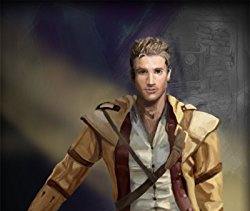
Cover designer and author of the fantasy series, The Fireblade Array
H.O. is missing again this month. We suspect a long long holiday is to blame.
0 0 Read more
Social Media and Your Author Brand
July 18, 2011 by A Slice of Orange in category Archives tagged as author branding, building a brand, Jenny Hansen, More Cowbell, Social Media, Twitter, Twitter hashtags, Writers In the StormI see many of you on Twitter and Facebook. I’ve been enjoying meeting even more of you on A Slice of Orange Daily, created by our very own Blog Mistress, Marianne Donley. I even see a few of you on LinkedIn.
Where are my OCC peeps conspicuously absent?
It’s pretty rare for me to see more than a few OCC’ers in my hashtag chats, with the possible exception of #myWANA. Either you’re hanging out somewhere else (that you’ll hopefully mention in the comments section) or you’re not using Twitter as fully as you could be.
Note: If you’re scratching your head over this hashtag business, please read this post on what Twitter hashtags are and why we need them.
OCC authors are very in-the-know about the changes sweeping through the publishing industry. I am so thankful to belong to a chapter with such amazing resources, and so many generous authors. We’re lucky to be on the cutting edge of this upheaval, so I’ll skip over that part since you all are pretty up to date.
If you don’t feel “up to date” and want to read more about the changing state of publishing, it’s hard to find a better resource than Kristine Kathryn Rusch and her publishing industry blogs.
This brave new world of publishing demands that an author build a brand.
What does that mean exactly? Simply put, your brand is the picture that pops into people’s mind when they hear your name.
For established authors, this picture is usually tied to one (or many) of your books. For the new or unpublished author, you need to get started on forming that picture in people’s mind as soon as possible. Participation in social media is one of the easiest ways to do this.
For more detailed information on branding, here are some of the best blogs I’ve found on the subject from people who say it far better than I do.
- Jami Gold’s How Do You Decide On Your Author Brand? – Part 1 and Part 2
- Jami has another wonderful post on Branding 101 – Online Brand vs. Author Brand
- An older post from leadership guru Michael Hyatt that still applies – 7 Ways to Build Your Author Brand Online
- Kristen Lamb’s must-read post on Bob Mayer’s Blog: Building An Author Brand.
- Bob Mayer discusses Social Media and the Writer in his Publishing Lessons series.
Particularly now that so many authors are going the Indie route with smaller independent publishers or even venturing into self-publishing for their first book, author branding is no longer a “nice to have.â€
Read the posts above and take a look at these two books: Kristen Lamb’s We Are Not Alone: A Writer’s Guide to Social Media, and Bob Mayer’s Warrior Writer. They will put you light years ahead of where you would have gotten on your own.
My personal observation is that people are seeking authentic connections and that, by branding themselves, an author is opening themselves up for connecting.
In my own experience on Twitter and both of my blogs, your Followers and your Tweeps become your friends. We spend time with these people, whether it’s chatting on Facebook, having a Worldwide Book Launch Party or sharing Sunday morning coffee.
Seemingly disparate people throughout the world are connecting through social media and enjoying the hell out of each other. It’s a beautiful thing.
Perhaps you don’t know where people are gathering on Twitter.
Fret no more…here’s the list of where my Tweeps and I hang out. This is your invitation to hang out with us. If you are hanging out somewhere else online, we want to know where that is!
Note: If I’ve missed any really cool hashtags, please let me know in the comments.
#myWANA – This love revolution started on Kristen Lamb’s blog (WANA stands for We Are Not Alone…I’ve linked to the book above)
#weWRITE – Hashtag started by Anna DeStefano and Jenni Talty based on their How We Write Wednesday Series. Note: There are no links allowed in this group – conversation on writing only…you’ll have to post your links elsewhere.
#PubWrite – these tweeps enjoy writing, sharing ideas and frustrations, and the occasional adult beverage.
#amwriting – writers from everywhere hang out here and encourage each other as they write. If this is your hangout, you might also enjoy http://amwriting.org/.
#amediting – writers from everywhere hang out here and encourage each other as they edit their works-in-progress.
#wordmongering – writers do timed sprints of 30 mins at :00 and/or :30 every hour. This is fun 24/7 and participants say they get so much writing done.
#Row80 – Hashtag started by Kait Nolan that I’m participating in. This is a writing challenge that lasts 80 days and requires that you publicly post your goal. For more details go here.
#nanowrimo – When November rolls around, the agony and the ecstacy of National Novel Writing Month can be found here. (Until then, we have Row80!)
What about you? Where do you commune with people on Twitter or Facebook (and why)? Are there groups of writers that you recommend above all others? Please share your discoveries with the rest of us!
~Jenny
http://jennyhansenauthor.wordpress.com
http://writersinthestorm.wordpress.com
Twitter: @jhansenwrites
Featured Books







NUMB
Will greed prevail, landing the Vitality Gem in the hands of an unpure soul or will Johnny Tanzer stand in his way with the wrath of the Gods?
More info →
THE ALLIANCE
When Leora Ebersole sees the small plane crash in her Old Order Mennonite community, she has no idea it's a foreshadowing of things to come.
More info → PRIVILEGED WITNESS
The beautiful wife of a senate candidate is dead; his disturbed sister is accused.
More info →