Heck Yeah! Lawyers are so Appealing
September 15, 2011 by Rebecca Forster in category The Write Life by Rebecca Forster tagged as Adventures in Writing, characterization, courtroom drama, Craft, lawyers, legal fiction
If you are a lawyer, a judge, a clerk, a bailiff, I love you. Really, I do. And so do millions of fiction readers. They can’t get enough of you, in and out of the courtroom. In my book* you are exciting, intelligent, mysterious, courageous, resourceful, thoughtful, witty, well-spoken and you are heroic. Of course, there are times when you are vicious, deceitful, brilliantly cold and cruel and that is pretty nifty, too.
I am married to a judge (he’s pretty sedate) but he was once a lawyer and that is how my fascination with you all began. Yet, years of trial watching, staff chatting and transcript reading has created a bizarre obsessive/compulsive need to figure you all out. Since I haven’t been able to, I can at least explain why you are irresistibly inspiring to this novelist and fascinating to those who love to read about you.
1) You speak legalese. It is like French: mysterious, irresistible, intimidating. Throw in a little Latin – a quid pro quo or prima facia – and you can melt a woman’s resolve and strike fear into the hearts of mortal men.
2) You are confident. Is there a super- secret-double-indemnity-swear-on-your-mother’s-grave-and-never-tell class that teaches you how to argue any and every point of view with grace and conviction? **
3) Bad guys listen to you. They even pay you to tell them what to do. That makes you a little edgy by association and who doesn’t like a bad boy -or girl?
4) You’re altruistic, defending bad people because you believe everyone deserves a defense.
5) You’re altruistic, prosecuting bad guys because you believe in justice.***
6) You are eye-candy. From the couture clad divorce-attorney-to-the stars, to the public defender sporting a plaid jacket and pony tail and the plaintiff’s lawyer in that Italian suit you turn courthouse hallways into runway.
7) You are funny. Sometimes you mean to be funny. Either way, a funny attorney is charming.
8) You are excellent secret keepers, which is not to be confused with being trustworthy. Though I believe you are trustworthy, that is a point of debate.
9) You are curious and tenacious.
10) You are heroes and not just in the literary sense. In real life you (and your expertise) are often the only things standing between a person losing something important to them: their children, their fortune, their reputation, their freedom and, yes, their life.****
*Actually, in all my books since I write legal thrillers.
**This also means that your significant other, children or parent can never win an argument. Experience tells me, the only recourse a normal person has when arguing with a lawyer is to cry and proclaim: “You are right, you are always right.” Works for me.
***A characteristic that make you the perfect inspiration for novels and films.
****You have my permission to show this list to anyone who questions your lovability, capability or worth. You may also use the aforementioned in advertising, closing arguments, opening statements and speed dating.
Dialogue Tags: How To Kill Off Some Of The Little Buggers
April 10, 2011 by A Slice of Orange in category Archives tagged as Craft, Sharla Rae, writingInstead of: “Stop it!” James said. [He could be angry but then again he could be laughing hard and telling someone to stop it. But if we say: James said, angrily, we’re telling.]
- Try: James sliced the air with his hand. “Stop it!”
- Try: “Stop it!” James held his sides, laughing.
Instead of: “Is she serious?” Amber asked, rolling her eyes.
- Try: “Is she serious?” Amber rolled her eyes and laughed.
Instead of: “Gosh, I love this song,” Jill said, dreamily. [Yikes an ly word]
- Try: “Gosh, I love this song.” Jill closed her eyes and swayed to the music.
Instead of: “Try it, you little weasel,” Jake bellowed. “Just try it.”
- Try: “Jake’s palms slapped the tabletop. “Try it, you little weasel. Just try it.”
Instead of: “You jerk!” Pam screamed, swinging her handbag at him.
- Try: “You jerk!” Pam lashed out at him with her handbag.
The same idea applies to the he or she thought tags.
Example:
Instead of: Can this day get any worse? Jane wondered.
- Try: Jane slumped into the nearest easy chair and kicked off her shoes. Could this day get any worse?
Instead of: If he comes through that door, I’ll brain him, Jill silently vowed.
- Try: If he comes through that door, I’ll brain him. Jill’s fingernails bit into her palms. [Shows determination]
Punctuation can be used to negate tags that indicate strong feelings. To demonstrate what I mean, I’ll use one of my above examples.
“You jerk!” Pam screamed, swinging her handbag at him.
Given there is an exclamation mark after jerk, we know Pam said this with strong feelings. Unless we want her screaming to draw the attention of characters around her, we don’t need to “tell” the reader she screamed. Also, her actions indicate anger and that makes the tag an even bigger overkill. But what if Pam said it under her breath so as not to draw attention? Do we need to say, she whispered? It works. But we could also say: Pam sneered and leaned close, her lips a mere inch from his ear. “Jerk.”
Note: Don’t over use exclamation marks. Again, body language will work just as well.
It must be said, though, that having all the characters on stage constantly nodding, scratching, dancing and throwing things would be just as annoying — not to mention ridiculous — as too many tags. So a few tags are allowed and in some instances they work better for a tight, straight to the point sentence.
I know of no set rules on how many dialogue tags are allowed on a page. The best rule of thumb is to vary your dialogue and cut them when possible. And if you’re still unsure, read the page out loud. Too many tags make the writing sound choppy. They also distract.
The right balance will result in tighter writing that “shows more and “tells” less.
Interesting related websites:
- Three Places Where You Should Tell: http://wordplay-kmweiland.blogspot.com/2011/02/three-places-where-you-should-tell.html
- From an Editor’s POV: http://theeditorsblog.net/2010/12/25/use-and-abuse-of-dialogue-tags/
- The Use and Abuse of dialogue tags: http://www.writing-world.com/fiction/said.shtml
- Avoid Creative Dialogue Syndrome: http://users.wirefire.com/tritt/tip4.html/
Writer-Person Digs Deep
October 3, 2008 by Marianne H. Donley in category Archives tagged as Cait London, Craft, writing
We all have life-lint, memories/incidents/visual scenes that attach to us while we travel through our lives. Bits of our lives remain quietly attached to the writer, waiting to be tapped and used in a unique story.
Question: Are there really unique stories?
Answer: While certain underlying elements can be common, each writer’s style and life experiences create a unique story. Repeat: We are each unique with our own stories.
IMHO, the best stories are built from scratch, from digging around within our collection of life experiences. To start from a pre-made story line (i.e. Secret Baby) is not digging deep, not exploring the who/what/why layers, though the final story may fall within that pre-made category. For instance, in developing my psychic triplet trilogy, (FOR HER EYES ONLY* is an Oct 2008 release) I basically understood how a mother relates to her daughters, and how those daughters relate to each other (well, not in the psychic sense J). Or as Kathleen Eagle says, “I’m selling them off in pieces.â€
Sponge-like, the writer absorbs everything around him. My best story lines came while sitting in waiting rooms. Or traveling. The feel of the story locations came from actually visiting Montana, Lake Michigan, and Lexington, KY, the psychic triplets’ homes. Since I am basically artistic (a trait common to many writers), the handbags, sculptures, and jewelry designs were fun to fictionally create. I love Celtic jewelry and an ancient brooch is spotlighted in the psychic triplets’ story arc. Runes and Vikings have long intrigued me, as have psychic-seer elements. In short, much of Me is chocked within my novels.
Our own life experiences can be fictionalized. Just for fun, let’s bump them up, taking them to another dimension. Here’s mine (these can make a fun bio):
Landscape Designer (I’ve planted a few roses in my day.)
Interior Decorator (I’ve painted walls, shoved furniture around.)
CEO (I run my household.)
Technical Engineer (I can use a television remote.)
Chef (Pots and pans manager.)
Lighting Engineer (I change light bulbs.)
Director of Security (I lock the house doors.)
Director of Finances (I pay bills and budget.)
While that’s fun, it’s also a serious examination. When you actually make a list of what you do throughout the day, it’s quite long and filled with great story-fodder. Tap into yourself. Use You.

Cait London’s OCC writer series began last month. Visit CaitLondon.com for more on craft. FOR HER EYES ONLY, the conclusion of her psychic trilogy is an October 2008 release.
NOELLE GREENE: What Did Tolstoy Know About Women?
December 1, 2006 by A Slice of Orange in category Archives tagged as Craft
“If you want a writer who understood his characters, look at Tolstoy,” my Dad said. “You’ve read War and Peace, haven’t you?”
I choked.
“Anna Karenina?”
Um, saw the movie. Downer ending, right?
The following week, a heavy box arrived from Amazon, a lovely new edition of Anna Karenina nestled inside.
It’s 817 pages, okay? Before the footnotes. But it’s brand-new and sits on my nightstand reproachfully. And I am curious. How did Leo Tolstoy understand characters?
I suspect this is where the term “tough sledding” originated. If slogging through the landscape of nineteenth century Russian literature isn’t tough sledding, what is?
I’m quite happy to leave literary analysis to the English majors. But now that I’m all of 10% into the book (did I mention the small type?), a couple of things are apparent about Tolstoy. And I’m starting to get it.
He writes from at least seven points of view (so far) in Anna Karenina and head-hops within scenes like crazy. But it works. His empathy for both men and women is all the more striking when you see that he holds someone in contempt or dislike. While deep in a point of view, he subtly gives the person plenty of rope. By then you understand the character so well that you don’t want him to hang himself.
Tolstoy wrote dialogue and introspection almost tenderly. Not necessarily nicely, but genuinely from that character’s point of view. Shades of gray are all over the place, figuratively speaking.
He had a genius for describing ordinary people’s emotions. The following passage describes how a heartbroken girl witnesses dashing Vronsky falling for older, married Anna:
She saw that they felt themselves alone in this crowded ballroom. And on Vronsky’s face, always so firm and independent, she saw that expression of lostness and obedience that had so struck her, like the expression of an intelligent dog when it feels guilty.
Can’t you just see Vronsky? It’s that uncanny ability to capture the essence of a moment that will keep me reading. I already know how it ends.
By Noelle Greene
0 0 Read moreFeatured Books
COLTON 911: CAUGHT IN THE CROSSFIRE
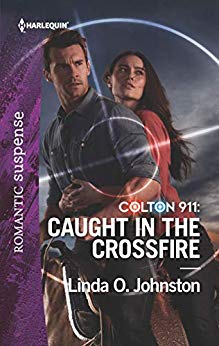
From hunting cattle rustlers
To being hunted by a killer







HOLE IN ONE

By day they had been fierce rivals in a collegiate golf competition, but at night . . .
More info →